
Each purchase in a loyalty program has to credit the right points or reward to the right member. For a single online store with a simple earning rule, accurate balances are usually enough.
That changes once you add brands, regions, or partner-funded offers. The platform now has to apply different earning rules, settle competing promotions, and track who pays for each reward, all before checkout completes. Otherwise, customers may receive incorrect rewards or lose access to benefits they have already earned.
When a platform can no longer support those demands, replacing it introduces another risk. Member balances, transaction histories, and program rules have to transfer accurately while earning and redemption keep running.
That's why the right choice depends on where your program is going. A straightforward ecommerce program doesn't need an enterprise loyalty engine, but a basic tool can struggle as you add brands, partners, and regional rules.
The 15 platforms below cover that range, so you can find one that fits without paying for complexity you don't need or outgrowing it too soon.
Best loyalty management platforms at a glance
| Platform | Who it's for | Key strengths | Platform type | Pricing |
|---|---|---|---|---|
| ReactorCX (Loyalty Methods) | Enterprises running complex, high-volume programs across brands, partners, or regions |
| Headless, API-first loyalty engine | Custom quote per engagement |
| Capillary | Groups building a cross-brand program without an in-house loyalty strategy team |
| Loyalty suite with strategy services | 12-month contract from $100,000 (AWS Marketplace) |
| Comarch | Multinational operators with data residency or on-premise requirements |
| Enterprise loyalty suite on cloud, on-premise, or hybrid | Custom quote by modules, member volume, and integrations |
| Talon.One | Retailers running loyalty alongside heavy coupon and bundle promotions |
| API-first incentives engine | Custom quote by data volume and coupons |
| Salesforce Loyalty Management | Companies already running sales, service, and commerce on Salesforce |
| Loyalty module inside Salesforce | $20,000 to $45,000 per org per month |
| Kobie | Brands scoring members’ emotional loyalty in a program they already run |
| Loyalty platform with strategy and managed services | Custom quote for platform modules and services |
| Epsilon Loyalty | Brands that can't yet match one member across channels |
| Managed loyalty platform with identity resolution | 12-month contract from $30,000 (AWS Marketplace) |
| Antavo | Omnichannel brands that put games at the center of the program |
| Headless, API-first loyalty platform | Custom quote based on active customers |
| Loyalty Juggernaut (GRAVTY) | Airlines and travel alliances replatforming a frequent-flyer program |
| Cloud SaaS loyalty platform for airlines and travel | Custom quote by program size |
| Oracle CrowdTwist | Restaurant groups and retail chains already on Simphony or Xstore |
| Oracle cloud loyalty service | Custom quote by active members |
| Annex Cloud | Consumer brands selling through department stores and independent retailers |
| Enterprise loyalty and engagement platform | Enterprise contract (typically $250M+ revenue) |
| Open Loyalty | Engineering-led programs building loyalty into their own apps |
| Headless, API-first loyalty engine | Platform fee plus an allowance set by monthly active members |
| Yotpo Loyalty & Referrals | Shopify brands that want reviews and loyalty on one account |
| Loyalty and reviews suite for ecommerce | Free to $299 a month up to 1,000 orders, custom above |
| LoyaltyLion | Shopify brands that reward subscribers, wholesale buyers, or members differently |
| Shopify loyalty app with a headless API | Free to $199 a month by order volume, custom above |
| Smile.io | Shopify and BigCommerce stores starting their first program |
| Shopify and BigCommerce loyalty app | Free to $999 a month by order volume, custom above |
1. ReactorCX (Loyalty Methods): Best for complex enterprise programs that need real-time offer decisions and a zero-downtime migration
ReactorCX is a headless, API-first loyalty engine that resolves earning and offers inside the transaction. When several brands or partners fund offers on one purchase, it applies the points and discounts before checkout completes. Each offer records who funds it, so every discount and point is charged to the brand or partner paying for it.
At a fuel station, for example, one transaction might qualify for loyalty points, a manufacturer-funded discount, and a mix-and-match offer. If each offer is applied on its own, discounts can stack further than you intended, or your own discount can apply where the manufacturer's would have covered it.
ReactorCX weighs the eligible offers together and applies the best one under the policy you set, which can favor the customer, protect your margin, or keep the manufacturer's offer intact. Because the points post in that same decision, the receipt matches the member's balance. On platforms that post points later, that mismatch is what sends members to support and leaves an agent reconciling the purchase by hand.
When members shop across your brands, ReactorCX keeps one wallet per member with a separate purse for each brand’s points. The member spends one total, and finance sees which brand issued each point. A return reverses points against the purchase that earned them, down to the line item in a mixed basket.
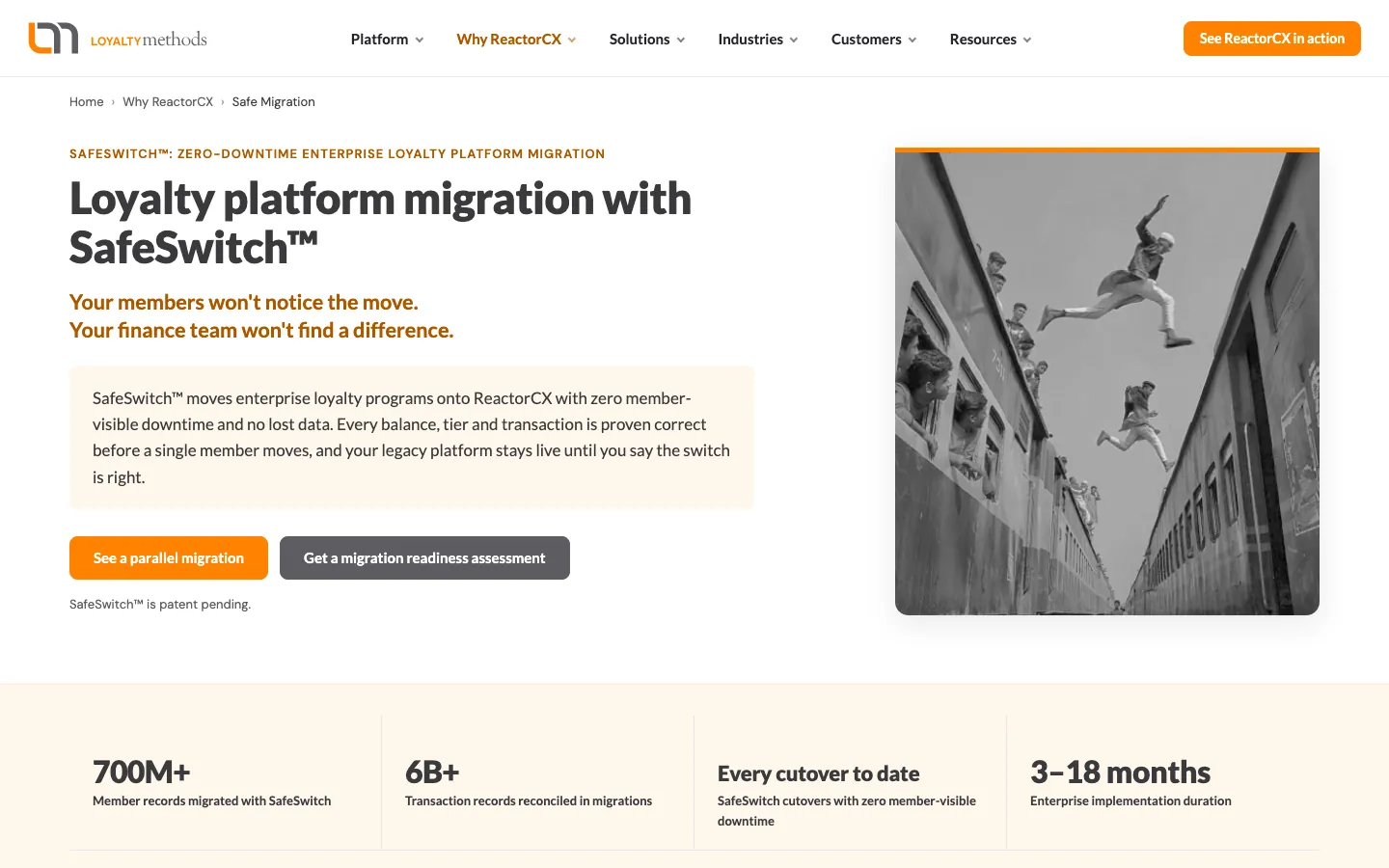
When you move off another platform, the rules and workflows your program runs on have to come with it. ThreadSync™ rebuilds them in specialist threads that follow how the program runs, from enrollment, earning, and redemption to member service, integration, and data. The threads reconcile at shared checkpoints, so the rebuilt program is validated before cutover begins.
Before any member moves, SafeSwitch™ runs ReactorCX alongside your current platform on the same production traffic, comparing balances, tiers, and earned and redeemed points across the full member base. After cutover, the old platform stays synchronized, and if the results don't match, SafeSwitch™ sends traffic back to it without manual restoration.
ReactorCX fits programs that have outgrown a simple engine, whether the complexity comes from several brands, a partner network funding offers, high transaction volume on a single brand, or a live program that has to change platforms without members noticing. A single-brand ecommerce program with one promotion calendar and no partners would use only a small part of it.
ReactorCX key features
- Programmable loyalty engine: Every rule, earn rate, tier threshold, and reward definition is open to your systems through the same APIs the admin console runs on.
- Real-time offer arbitration: Overlapping offers resolve in the same call as earning, under a customer-first, business-first, or vendor-protected policy.
- Multi-currency purses: Points are tagged at the source and tracked as sub-balances in one member wallet across brands and currencies.
- Liability tracking and audit trail: Every liability figure traces back to the member activity behind it, with accrual and redemption history for finance.
- SafeSwitch™ migration: A four-gate cutover validates parity against the full member base before any member is switched over.
- Member Care Portal: Support staff see balances, tiers, and transaction history and make account adjustments from one dashboard.
ReactorCX pricing
Loyalty Methods prices ReactorCX per engagement, with implementation included. Each quote is scoped to:
- Brands and banners: how many run on the program
- Transaction volume: the activity the engine processes
- Integration scope: the point-of-sale, CRM, and marketing systems ReactorCX connects to
- Migration scope: whether a live program is moving off another platform
What customers are saying about Loyalty Methods
"LM's focus on innovation, agility, and successful, seamless delivery has made a massive difference in our efforts."
Lucy Donaldson, Head of Loyalty, Martech and Consumer Ecosystems, Western Union
"Loyalty Methods has been a crucial partner, providing a flexible platform and bringing an experienced team that has partnered well with BP to deliver on our initiatives with excellence and dedication."
Tarang Sethia, Chief Product Officer and General Manager, Digital Products, Mobility and Convenience Americas, BP
2. Capillary: Best for building a cross-brand program without an in-house loyalty strategy team
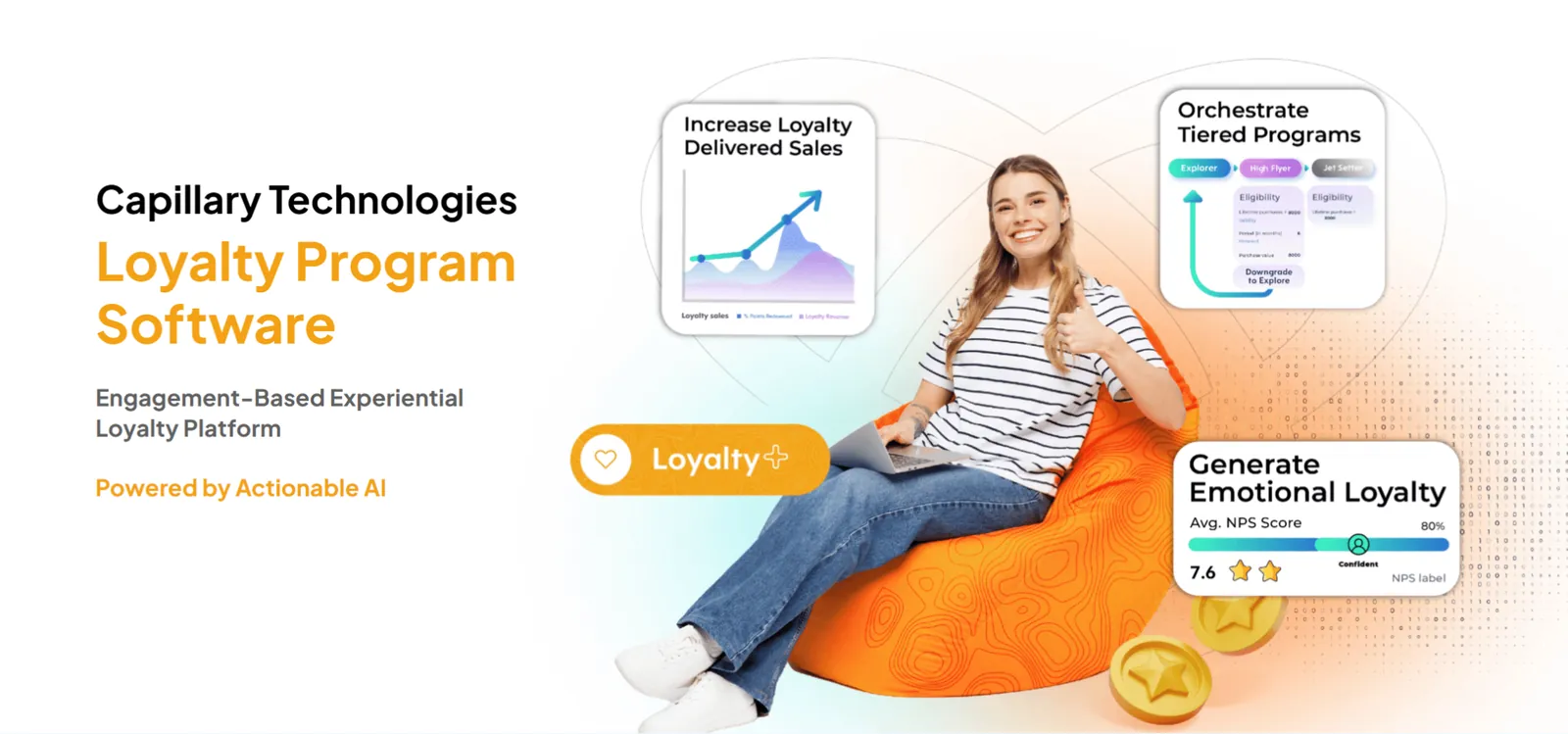
Capillary's Loyalty+ runs every brand in your group on one loyalty engine, whether you want a single group program or a separate program for each brand. With a group program, members keep one points balance and can earn and redeem across your brands. Separate programs let each brand or country set its own tiers and earning rules, while every member profile stays in one customer database.
If you don't have a loyalty strategy team in-house, Capillary's Brierley consulting business can help you design and run the program. The Brierley Loyalty Quotient (BLQ) measures how emotionally and behaviorally attached your members are and compares your results with your competitors’, so you can plan program strategy on more than campaign performance.
Once the program is live, aiRA, Capillary's AI assistant, turns a plain-language brief into a campaign. If you ask it to win back lapsed members in every market, it drafts the audience, rewards, messages, and channel setup for each market. Nothing goes live until your team approves it.
Redemption limits can't change once a promotion is live, though. Per-customer limits and total redemption counts stay as you set them at launch, so a promotion that hits its cap early stays capped, and your team has to settle those numbers before it goes out.
Capillary can work when you want loyalty software and the strategy behind it from one provider, or need to coordinate campaigns across brands and markets. If your team already designs and runs the program itself, Brierley's consulting would cover work you've already staffed.
Capillary key features
- A rewards catalog that also works for points earned on another loyalty platform, with vendor rewards such as miles, cashback, sweepstakes, and auctions
- Promised points that become redeemable after a set number of days, or earlier on an external trigger, at the bill or line-item level
- Point expiry set by a fixed date, a rolling window from each earning event, the member’s registration date, or a custom transaction or customer field
- Links to partner loyalty programs run outside Capillary, with partner tiers synced through its APIs
- Milestone targets assigned to each member, with the reward released once the target is met
Capillary pricing
Capillary doesn't publish plans or a rate card on its own site. Its AWS Marketplace listing sells Loyalty+ on a 12-month contract (from $100,000) that scales with the units of use you commit to.
Capillary reviews and ratings
3. Comarch: Best for hosting a multi-national program on-premise or in-country for data residency
Comarch lets you run one loyalty program across countries with different data residency rules. Those rules decide where you can store member data and which infrastructure you can use, and they can differ from one market to the next.
Comarch gives you three hosting models to meet them. Comarch Cloud is the fully managed SaaS option, run from Comarch's own data centers. External Cloud puts the platform in your preferred public cloud, such as Azure, AWS, or GCP. And for strict regulatory or infrastructure requirements, Comarch can install the platform on your own sites, either fully or in a hybrid setup.
Whichever model you choose, one platform still covers every market. Comarch supports multiple brands, countries, and currencies from a single platform instance, so you can apply the same loyalty rules in every market while choosing where the platform runs in each. A residency requirement in one country doesn't force you to split the program by region.
Covering every market from one platform takes time to set up, though. A standard implementation runs at least three months and longer as integration requirements grow, and a program that spans several markets usually connects to a different set of point-of-sale and CRM systems in each one. Plan a multinational rollout for well past that minimum.
Comarch makes the most sense when at least one of your markets dictates where member data is hosted. If none of them does, the hosting choice that sets Comarch apart is one you'll never use.
Comarch key features
- Three hosting options, including fully managed SaaS, your own Azure, AWS, or GCP tenant, or on-premise and hybrid installation
- Multicountry, multi-currency, and multibrand configuration from a single platform
- Breakage, outstanding-liability, and cost-per-point analysis for your finance team
- Actuarial forecasting of redemption costs and point liability through a specialist partner
- Outsourced program management, with dedicated managers for campaigns, partners, and KPI reporting
Comarch pricing
Comarch doesn't publish pricing for its enterprise platform. It tailors each quote to three factors and states any optional modules or future integrations upfront.
- Modules: the parts of the platform you select
- Program scale: the size of the program and its member volume
- Integration complexity: the systems the platform has to connect to
Comarch reviews and ratings
4. Talon.One: Best for running loyalty alongside a heavy coupon and bundle calendar
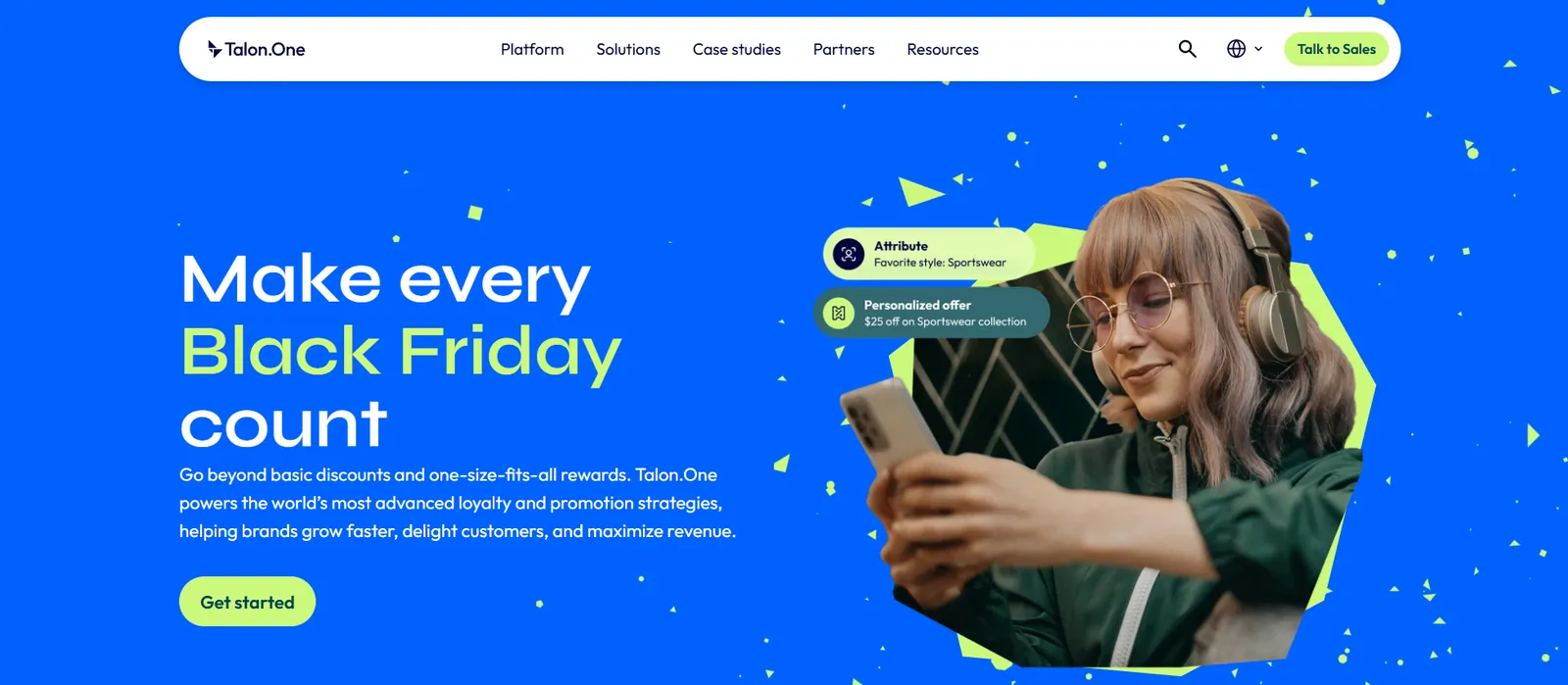
Talon.One runs your loyalty points and your coupon, bundle, and discount campaigns from the same rules, checked against the cart and each item in it. Your team builds and updates both in one place, without maintaining separate systems for promotions and points rules.
Because those rules read the cart, points can respond to what's in it. A campaign can award bonus points when a customer buys a particular combination of products, for example. Members also see their points balance and tier status on the cart and product pages while they shop.
When several campaigns qualify for the same order, you decide how Talon.One handles the overlap. You can apply every eligible campaign, stop after the first eligible campaign, or select the campaign with the highest discount value. You can also organize campaigns into nested groups, allowing different groups to follow different evaluation rules.
Each group follows one evaluation mode, so campaigns that need different stacking behavior must sit in separate groups or subgroups. A campaign that lands in a group set to apply every eligible campaign stacks with the others in that group, whether you meant it to or not.
If you run loyalty alongside coupons, bundles, and discounts, Talon.One gives you control over how those offers combine at checkout. With a simple points program and little promotional logic, though, you'd use only a small part of the engine.
Talon.One key features
- Bundles that combine any mix of items into one offer at a new price
- Referral rewards for both advocates and their friends, with fraud checks on referral activity
- Gamified challenges built to raise order frequency and capture first-party data
- Non-transactional rewards such as gifts, perks, and partner rewards that don't discount the item
- POS and omnichannel integration, including Oracle Retail Xstore, running the same logic online and in store
Talon.One pricing
Talon.One doesn't publish prices. Cost is set per business by data volume and coupon count, and a free developer trial environment is available. It sells three named tiers:
- Starter: at least 500,000 coupons, the holistic promotion suite, onboarding and support, all third-party integrations, a staging environment and SDK library, and audit logs with user roles
- Professional: adds expert technical support, webhook integrations, a dedicated Customer Success Manager, a dedicated database server, and campaign setup support and user training
- Enterprise: adds enterprise-grade scalability, individual user onboarding, instant troubleshooting and response, unlimited users and webhooks, and customized SLAs
Talon.One reviews and ratings
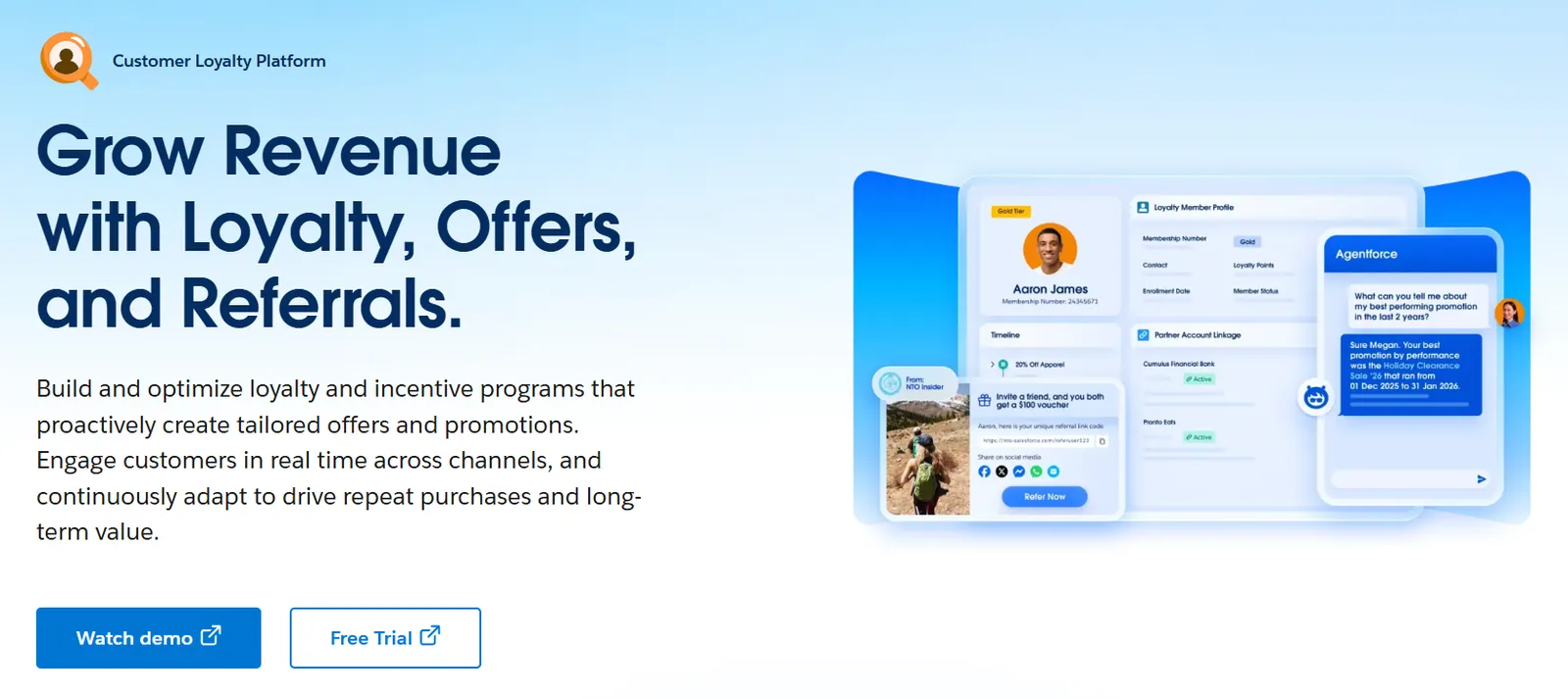
5. Salesforce Loyalty Management: Best for loyalty on the same customer record as Sales and Service Cloud
Salesforce Loyalty Management keeps loyalty data alongside the customer records your sales and service teams already use. If you run Sales Cloud, Service Cloud, and Commerce Cloud, you can connect loyalty to existing customer operations without building a separate customer database and maintaining integrations to keep records in sync.
A service representative handling a case, for example, sees the member's tier and voucher balance next to the rest of the customer's record and can answer a points question without switching systems. Marketers using Marketing Cloud Next (also called Agentforce Marketing) can also combine loyalty data with purchase and case history when building customer audiences, without first connecting separate data sources.
Integrating Loyalty Management with your checkout takes additional work, though. Salesforce's Transaction Journal Execution API processes a transaction without checking whether a promotion has reached its configured limits. If your integration calls it directly, it has to check eligible promotions first and pass them in. The alternative is the Unified Execution API, which evaluates promotions and processes the transaction in one request. If you build without either, checkout can keep applying a promotion after its limit is reached.
Salesforce Loyalty Management makes sense when your sales, service, and commerce teams already work in Salesforce on Enterprise, Performance, or Unlimited Edition. Without that footprint, you'd be setting up a Salesforce org to run loyalty, and the shared customer record that sets it apart would start out empty.
Salesforce Loyalty Management key features
- Real-time promotion APIs for quantity, amount-off, and bundle promotions
- Program liability reporting in CRM Analytics, filterable by program and tier
- AI agents that draft accrual and spend-based promotion templates and answer member questions
- Google Wallet loyalty passes, added from iOS or Android, showing member ID, tier, and points
- Asynchronous redemption processing that keeps checkout responsive during high-volume redemption periods
Salesforce Loyalty Management pricing
Salesforce Loyalty Management is licensed per org per month on three published tiers, all billed annually.
- Starter: $20,000 per month, one loyalty program, Quick Promotions, 1 million loyalty events a year, and 50,000 API calls a day
- Growth: $35,000 per month, adds full benefit management, dynamic promotions management, and partner administration, with 15 million loyalty events a year and 100,000 API calls a day
- Advanced: $45,000 per month, adds multiple loyalty programs on one org and clubs, with 50 million loyalty events a year and 500,000 API calls a day
Salesforce Loyalty Management reviews and ratings
- Gartner Peer Insights: 4.4/5 (14 reviews)
6. Kobie: Best for scoring each member’s emotional loyalty in a program you already run
Kobie's Emotional Loyalty Scoring (ELS®) methodology measures why members keep engaging with your brand, scoring each one on three drivers: habit, reciprocity, and status. Your loyalty team can then give a member who comes back out of habit a different reward from one who comes back for status.
Telling those two members apart takes more than purchase history, since both might spend the same amount. Kobie's Zero-Party Data Hub captures what members tell you directly, through preference updates, gamified challenges, badges, and customer-care interactions. It feeds those answers into ELS® alongside the transactional and behavioral data in the Panoramic Customer Profile™, Kobie's single record for each member.
That combined profile drives KLICs®, Kobie's Loyalty Interaction Cues, which trigger interactions from each member's behavior during acquisition, onboarding, nurture, retention, or win-back. A member who's drifting gets a different message from one who visits every week as soon as their behavior changes, without waiting for a broader segment to refresh.
Kobie pays off when you want to score and act on emotional loyalty inside a points or tiers program you already run, with Kobie's strategy and managed services behind it. If you still need the basics, like earning, redemption, and member management, you'd be buying a scoring method ahead of the program it's meant to shape.
Kobie key features
- A conversational AI assistant for program configuration, liability modeling, and campaign optimization
- A liability ledger tracking cost and attribution for every point from earn to burn
- One record combining transactional, behavioral, emotional, and zero-party data for members and non-members
- A rewards storefront spanning gift cards, merchandise, travel, your own inventory, and auctions
- Entity Resolution that matches one member across the data sources feeding the profile
Kobie pricing
Kobie doesn't publish its pricing. Each quote covers the platform modules you choose and the services attached to them.
Kobie reviews and ratings
- G2: 4.8/5 (10 reviews)
7. Epsilon Loyalty: Best for recognizing members across channels before rewarding them
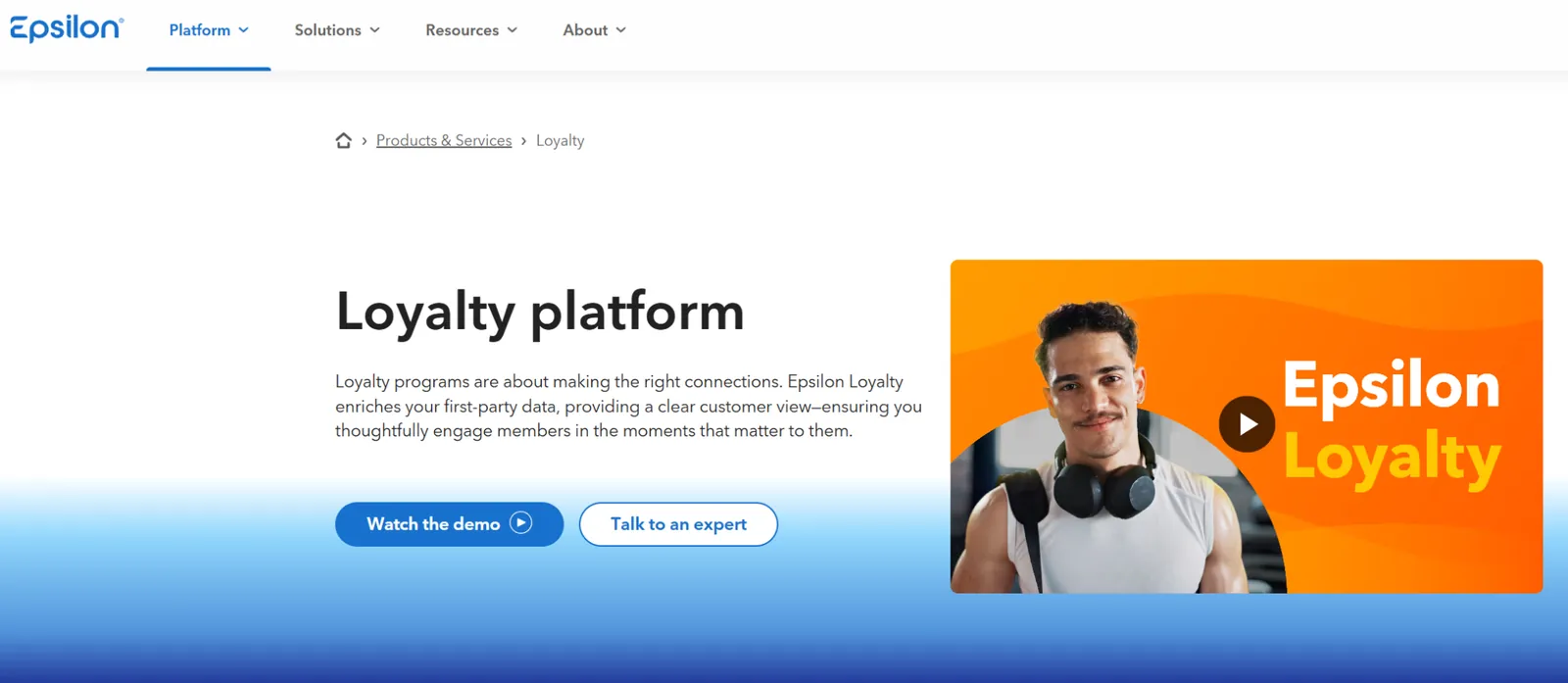
Epsilon Loyalty connects a member's email, loyalty card, device IDs, and mailing address to one profile through COREid before the program decides what to offer. Someone who opens your email is recognized as the same member when they use a loyalty card in a store, and again when they browse your site on a phone later that day.
Once the member is recognized, Epsilon uses that profile to decide what happens next. Predictive and agentic AI work from the member's identity and behavior to choose an offer, channel, or timing. If you already run Adobe Experience Platform or Salesforce CDP, direct integrations carry the same identity data into the loyalty program.
Epsilon runs more as a managed program than a self-service tool. Strategic guidance and assisted program configuration come with the platform. If your team wants to configure every loyalty rule itself, more of those changes go through Epsilon's people than they would on a self-serve platform, which makes implementing them take longer.
Epsilon works when you need to know more about your members than your own data shows, starting with whether the shopper opening your emails and the one at your register are the same person. It connects those touchpoints before your program decides what to offer.
Epsilon Loyalty key features
- Self-service offer management through insights dashboards, without a services request for every change
- Omnichannel member messaging across email, SMS, in-app, push, and direct mail from one profile
- ISO 27001 certification, a SOC 2 audit covering parts of the business, and PCI compliance
- Native connectors for your marketing stack, plus direct identity integrations with Adobe Experience Platform and Salesforce CDP
- Tiers, points, and personalized offers orchestrated on the same identity-linked profile
Epsilon Loyalty pricing
Epsilon doesn't publish prices on its own site. Its AWS Marketplace listing sells the platform on a 12-month contract (from $30,000), with a pay-as-you-go option on the same term (from $2,500) and private offers on request. The packages differ by hosting, support, and how much configuration Epsilon handles.
- Starter: shared hosting, self-serve administration, pre-configured program options, and limited configuration assistance
- Standard: adds dedicated hosting, assisted program configuration, and partner and in-kind rewards
- Enterprise: adds advanced hosting and support options, features built to client specifications, an advanced value proposition and rewards, and support for complex integration requirements
Epsilon Loyalty reviews and ratings
- G2: 4.3/5 (2 reviews)
8. Antavo: Best for prize wheels, challenges, and other game mechanics built into the loyalty program
Antavo lets your marketing team build game mechanics such as prize wheels, challenges, and points pooling as native modules of its loyalty engine. Because the engine is headless, those mechanics show up wherever your members meet the brand, online or in store.
The modules go deeper than adding a game to the member experience. On a prize wheel, for example, you set the win rate for each reward and how often a member can claim it, and different segments can see different wheels. Challenges combines actions such as purchases, reviews, and referrals into a single milestone, and Antavo's Garmin integration adds activity data from connected wearables.
Gamified profiling surveys also turn preference questions into a game, so members tell you what their purchases don't, such as which products or categories they prefer, and you can target offers on those answers.
Your marketers can't launch those mechanics on their own, though. Connecting Antavo to the web, app, and in-store systems where members play needs developer support during setup, even though your marketers run the program day to day after launch. Plan for that integration work before the first game goes out.
Antavo fits when gamification sits at the center of your loyalty program and you want several mechanics running at once, managed by your marketing team after launch. If your program is a straightforward points-and-rewards setup, however, most of the module catalog would go unused.
Antavo key features
- Points, credits, and stamps as separate currencies in one program
- Tiers based on spend, points, or invitation, with annual, rolling, or anniversary expiration
- Apple Wallet and Google Wallet cards, plus receipt scanning for purchases outside your POS
- AI tools for program design and performance analysis that connect to Claude and ChatGPT
- ISO 27001, 27017, and 27018 certification, GDPR compliance, SSO, MFA, and role-based access
Antavo pricing
Antavo doesn't publish prices. It bills only for customers who engage with your program, and each of its three plans is quoted.
- Start: for ecommerce brands that want a quick, simple program built to scale over time
- Grow: for brands outgrowing a tactical loyalty app and wanting more advanced campaigns and customer experiences
- Enterprise: for brands running loyalty at scale across multiple markets, channels, or brands
Antavo reviews and ratings
9. Loyalty Juggernaut (GRAVTY): Best for airlines replatforming a frequent-flyer program with alliance partners
Loyalty Juggernaut's GRAVTY connects your loyalty engine to the passenger service system (PSS) through pre-built adapters for Amadeus Altéa, Sabre SonicAlpha, and Navitaire New Skies. That keeps passenger activity in sync between the PSS and the program, which is one of the harder parts of an airline loyalty replatform.
The adapters cover the trip from booking to post-departure, so miles post in real time as members travel. NDC Level 4 support lets bags, seats, and lounge access earn too.
Alliance partners run on the same engine. Built-in rules for OneWorld, Star Alliance, and SkyTeam handle reciprocal earning and redemption, and GRAVTY settles the value across partners, so a member flying a partner carrier still earns and redeems in your program.
Once the program is running, GRAVTY's AI tools help your team manage it. With GRAVTY Compass, you ask why a metric changed in a conversational interface and get the answer without building a report first. AgenticTest can also simulate a rule change before it goes live, which catches a tier rule written wrong before it downgrades members who've earned their status or upgrades members who haven't.
GRAVTY runs as cloud SaaS on AWS, with a hybrid setup as the alternative. If your policy requires member data on infrastructure you control, your security team will need to work through that hybrid arrangement early, because it shapes how the replatform is scoped.
If you're replatforming a frequent-flyer program built around PSS integration, ancillary earning, and alliance reciprocity, GRAVTY covers that work from the start. Outside airline and travel programs, its pre-built adapters and alliance rules have little to connect to.
Loyalty Juggernaut (GRAVTY) key features
- Pre-built PSS adapters for Amadeus Altéa, Sabre SonicAlpha, and Navitaire New Skies, with NDC Level 4 readiness
- OneWorld, Star Alliance, and SkyTeam rules, plus reciprocal earn with partners outside its customer base
- Conversational analytics and AgenticTest rule simulation before launch
- Award-seat pricing that adjusts to live demand, load factor, member tier, and partner balance
- Partner onboarding and settlement for co-brand cards, hotels, and retail partners
Loyalty Juggernaut (GRAVTY) pricing
Loyalty Juggernaut doesn't publish GRAVTY's pricing. It scopes each enterprise contract to the size and structure of the program.
10. Oracle CrowdTwist: Best for loyalty at restaurants and retailers already on Oracle POS
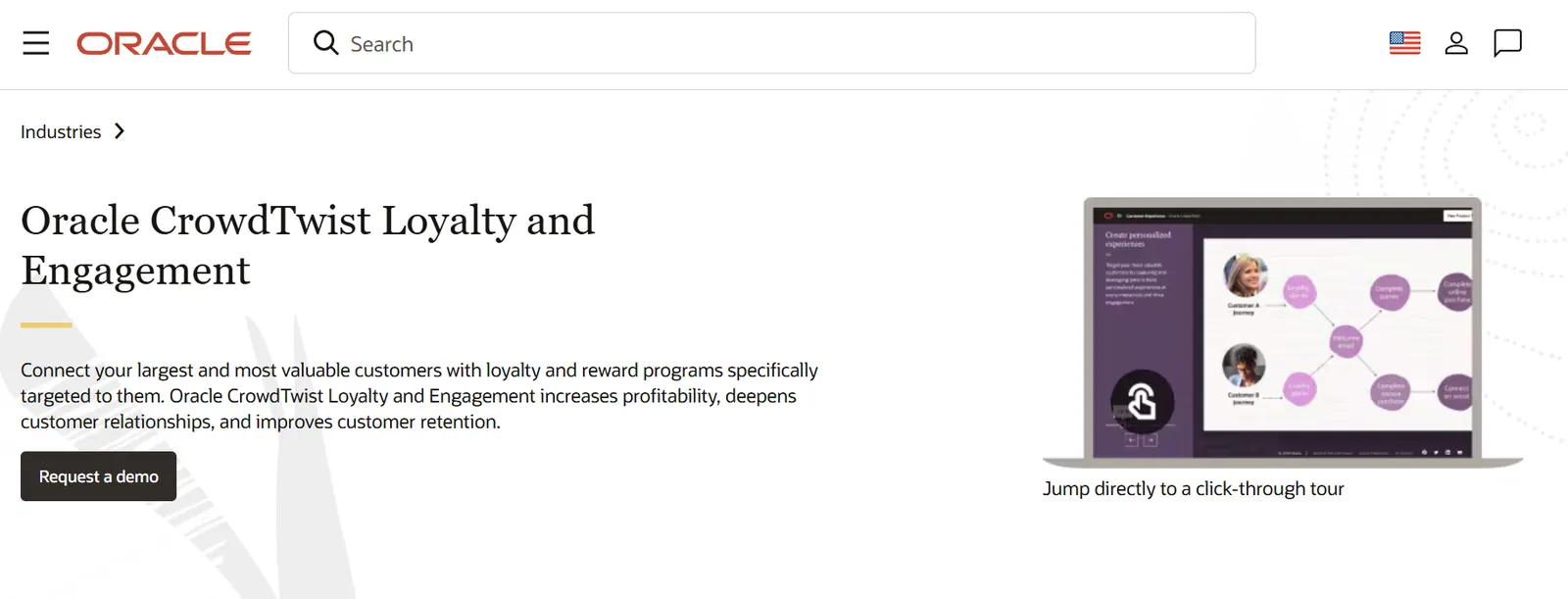
Oracle CrowdTwist builds loyalty into the checkout flow of Oracle's Simphony and Xstore point-of-sale systems through native integrations. In a restaurant using Simphony, your staff can enroll members, look up available rewards, and let guests pay with points at the POS, with no separate integration project.
Stores on Oracle Retail Xstore get the same treatment at the register. Staff can find a member by their contact details, apply an eligible discount, then award or deduct points as a purchase or return goes through. Managers can also add appeasement points when a customer needs compensation.
Behind the register, CrowdTwist connects with Oracle Unity CDP in both directions. Engagement and transaction data flows into Unity for segmentation, and Unity segments flow back to trigger CrowdTwist rewards. That means a segment your marketers build in Unity, such as guests who haven't visited in two months, can earn a comeback reward without anyone exporting a list.
Native integrations don't mean you can set the program up yourself, though. Oracle's professional services team configures it first, which adds a services dependency even if your team plans to run loyalty in-house afterward.
CrowdTwist fits best if you run a multi-location restaurant group or retail chain on Simphony or Xstore and already work with Oracle CX, because the POS integration and the services relationship come with that setup. If you're choosing a loyalty platform independently of Oracle, you'd take on the services dependency for a POS integration you can't use.
Oracle CrowdTwist key features
- Native Simphony integration for enrolling members, checking status, and redeeming rewards at the register
- Native Xstore integration (versions 21 through 24, so older stores upgrade first) for member lookup, discounts, point accrual and returns, and appeasement points
- Two-way customer data platform sync that sends segments back to trigger rewards
- Engagement widgets for surveys, codes, sweepstakes, and social account connections
- Households that let members pool points with family or friends toward shared rewards
Oracle CrowdTwist pricing
Oracle doesn't publish CrowdTwist pricing. It meters the base CrowdTwist Cloud Service by active members per program instance and scopes add-ons separately, such as additional test environments, receipt scanning, extra program instances, and website hosting.
11. Annex Cloud: Best for rewarding purchases made in stores your brand doesn't run
Annex Cloud reads a member's photographed receipt and credits the purchase, so your program can count sales your own checkout never sees.
Its AI reader extracts the line items and total from the receipt, and your rules decide whether the purchase earns points automatically, goes to manual review, or is rejected with an explanation. You can limit earning to approved retailers while still capturing purchases from stores you have no point-of-sale connection with. Rules can also check how old the receipt is, how much was spent, and whether discounts applied.
A beauty brand selling through department stores, for example, can reward a first purchase it would otherwise have no record of. Or, a consumer goods company can capture sales across a network of independent retailers it gets no transaction data from.
Not every receipt clears automatically, though. When the AI reader isn't confident in what it read, the receipt waits for a person to approve it. The stricter you set that confidence threshold, the more receipts go to the queue, and members wait for their points until someone on your team works through it.
If most of your sales happen in stores you don't run, Annex Cloud gives your program a way to see them. When your brand already controls its own checkout and captures transactions directly, by contrast, receipt scanning has little to add.
Annex Cloud key features
- Receipt scanning with an automation percentage you set, so volume below your OCR confidence floor routes to a reviewer
- 125+ pre-built integrations, including SAP Customer Data Cloud, Adobe Commerce, Shopify Plus, and Adyen
- Event-triggered, multi-step journeys with predictive scoring for churn risk and spend lift
- Segmentation on any attribute or behavior, refreshed in real time
- Double-sided referral rewards with fraud controls and attribution to the referring member
Annex Cloud pricing
Annex Cloud doesn't publish pricing tiers. It works with enterprises (typically $250 million+ in annual revenue) and prices each account through an enterprise contract.
Annex Cloud reviews and ratings
- Capterra: 4.2/5 (39 reviews)
12. Open Loyalty: Best for building loyalty into your own apps through one API
Open Loyalty runs every loyalty operation through a REST API, so earning rules, tiers, campaigns, member profiles, and rewards are all controlled from your own code. It works with any backend that can make HTTP requests, and you can run a program end to end without its admin panel.
The API covers more than points and rewards. Your developers can combine multi-wallet points, tiers, challenges, badges, and leaderboards in the experience you design, all through the same API. That way, you can control both how loyalty works and how it looks.
Open Loyalty extends that approach to AI-assisted program management. Its MCP server, an open-source npm package under the MIT license, lets you connect an MCP-compatible client such as Claude or Cursor to work with the platform. And when your client proposes a change, like a new challenge, you can require manual approval before it reaches the live program.
The platform’s extensibility also leaves more of the implementation and ongoing maintenance with your team. Your developers build the member experience, connect the APIs, and maintain the program logic. Changing a mechanic is usually a development task, though program admins can add custom member fields without developer time.
Open Loyalty makes sense when engineering leads your program at enterprise scale and you want to own how the member experience and mechanics are built. But without in-house or partner developers, an API-first platform gives you more implementation work than you need.
Open Loyalty key features
- Multitenancy, with one installation serving several brands, countries, or client projects with separate data
- Single sign-on and role-based access through SAML and LDAP, with per-user permission levels
- ISO 9001 and ISO 27001 certification, GDPR compliance features, and yearly OWASP and CWE testing
- Webhooks and AWS S3 exports for real-time event push and scheduled warehouse loads
- Automatic point reversal when an order is returned or canceled
Open Loyalty pricing
Open Loyalty doesn't publish prices. It charges a platform fee plus an allowance fee set by monthly active members (registered members with at least one loyalty event that month). Every deployment includes all features, and the contract carries an uptime guarantee (99.99%).
Open Loyalty reviews and ratings
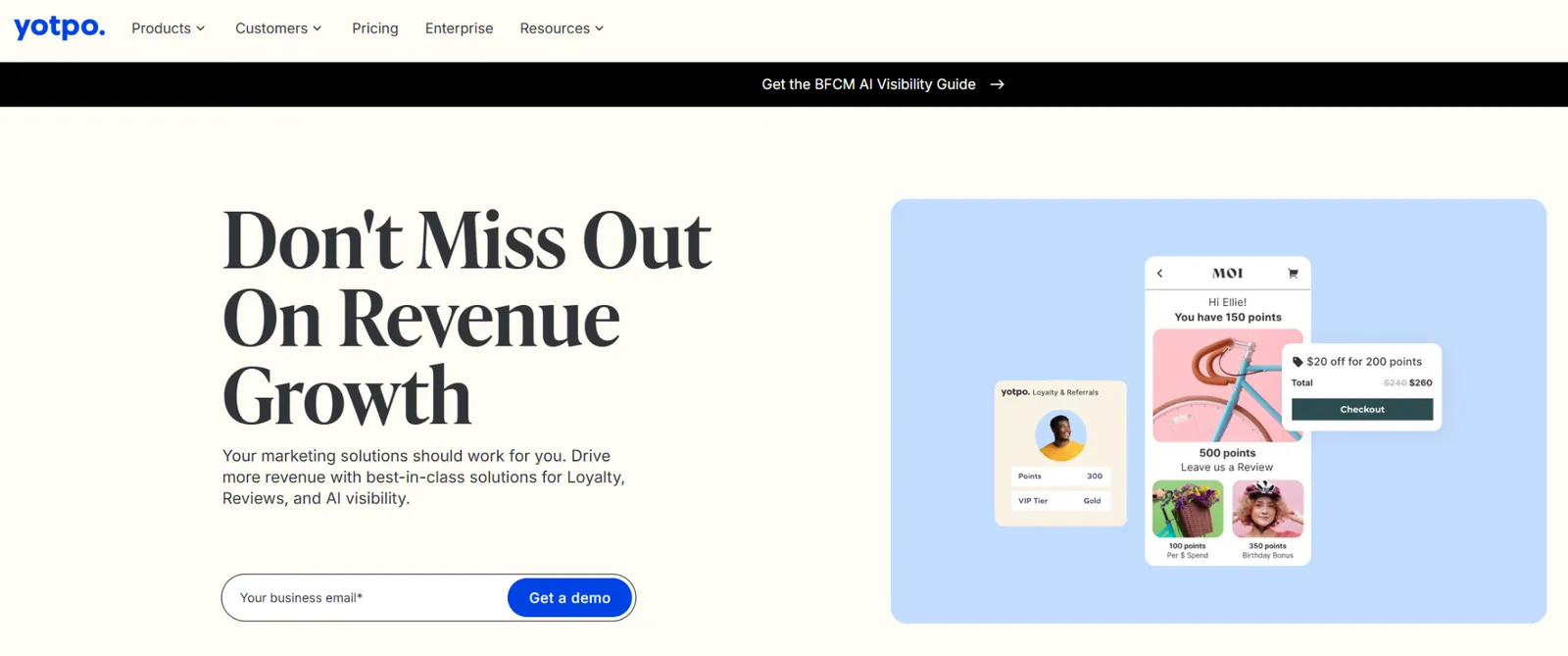
13. Yotpo Loyalty & Referrals: Best for loyalty and product reviews in one ecommerce suite
Yotpo runs loyalty and product reviews from one account, so your loyalty program can reward the content your reviews program collects. You can award points for a written review and set a separate rule for reviews with a photo or video, which gives shoppers a reason to add the visual proof your product pages show the next buyer.
Your loyalty data also reaches your email and SMS tools. Loyalty embeds in Klaviyo's Customer Hub and connects to Postscript and Attentive, so a campaign can target members by points balance or VIP tier. The same setup works on Shopify, Shopify Plus, BigCommerce, Adobe Commerce, and WooCommerce, and a REST API covers custom storefronts.
Beyond your online store, though, Yotpo leans on other companies' tools. It retired its own Email and SMS products at the end of 2025, so your loyalty emails and texts are built and sent from a separate platform you contract and connect.
In physical stores, Shopify POS connects directly, but a register like Square needs a third-party integration, so in-store earning on another system depends on a connector Yotpo doesn't build.
If you sell mainly through a Shopify or Shopify Plus store and want one team running reviews and loyalty together, Yotpo puts both programs in a single account your marketers can manage day to day.
Yotpo key features
- 25+ no-code earning rules for purchases, birthdays, social follows, reviews, and SMS opt-ins
- VIP tiers based on spend, purchases, points earned, or customer tags, including hidden and invite-only tiers
- A mobile-first on-site loyalty hub for logged-in and logged-out shoppers
- Shopify POS support for earning and redeeming points in store
- Dynamic segments on VIP tier, point balance, redemption history, and purchase behavior
Yotpo pricing
Yotpo's Free and Pro loyalty plans carry list prices, and the other plans are quoted. Loyalty & Referrals is sold separately from Reviews & UGC, with bundle pricing for buying both.
- Free: $0 per month, basic points and referrals, with AI chatbot support
- Pro: from $199 per month for the first 500 orders, scaling with order volume to $299 a month at 1,000 orders; custom quote above that
- Premium: custom quote, adds VIP tiers, segments and analytics, audience-triggered campaigns, POS support, and a dedicated customer success manager
- Enterprise: custom quote, adds cross-brand programs, multi-market scale, dedicated security and compliance, and priority access to professional services
Yotpo reviews and ratings
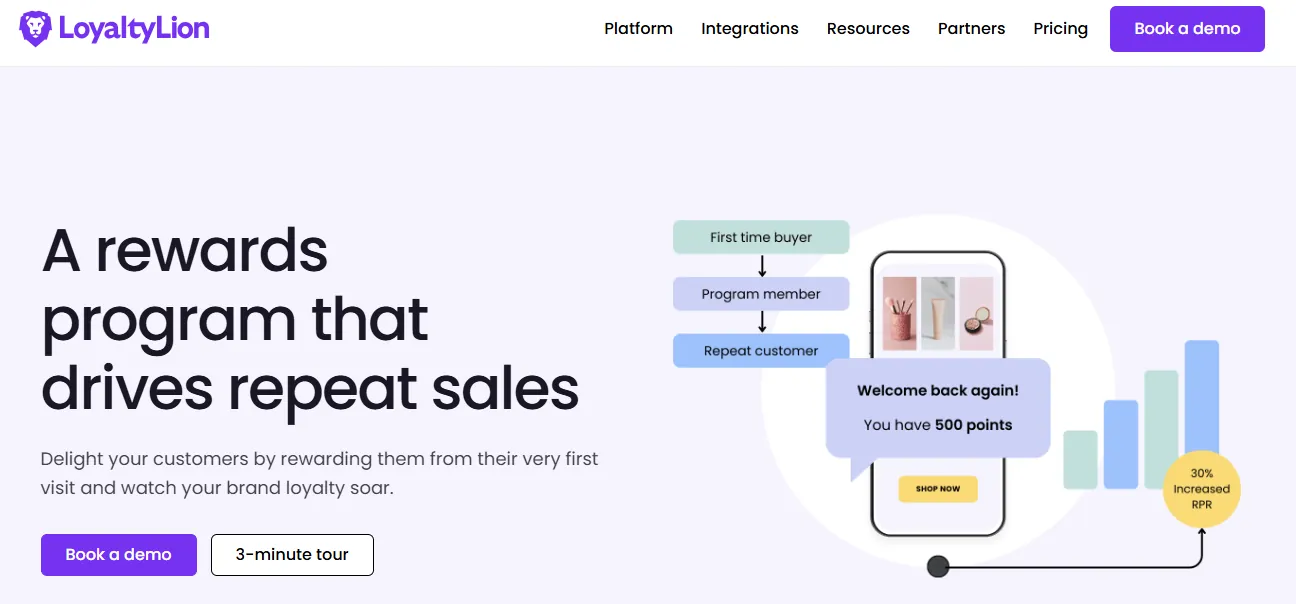
14. LoyaltyLion: Best for loyalty tiers built around subscribers and other customer groups on Shopify
LoyaltyLion can base a tier on who a customer is as well as what they spend. It reads the Shopify tags on each account, so a subscriber tier can reward customers who keep renewing through Recharge or Loop, and a conditional tier can open to any group you tag yourself, such as wholesale buyers or paid members.
Points can be targeted the same way. Tag-based segments let you give one group more or fewer points, such as double points for customers on a subscription, and custom activity rules reward actions beyond purchases, like completing a profile, taking a quiz, or checking in at an event.
Moving to LoyaltyLion from another provider leaves your order history behind, though. Members' points, tiers, and birthdays come across, but past orders can't be imported, so any report or rule that looks back at purchases only sees orders placed after launch. Your team also rebuilds its own email triggers during the move.
If you run a Shopify or Shopify Plus store with subscribers, wholesale buyers, or paid members you want to reward differently, LoyaltyLion lets you give each group its own tier and earning rules.
LoyaltyLion key features
- Hidden, invite-only tiers for VIPs and advocates, kept out of the public tier list
- Klaviyo events for tier upgrades, rewards earned, and enrollment, for triggered email and SMS
- Conditional, multi-step campaigns with logic branches and time delays
- A headless API and developer portal for custom loyalty UIs on Hydrogen, mobile apps, or POS
- Shopify POS earning and redemption across single-location and multi-location stores
LoyaltyLion pricing
LoyaltyLion prices its plans by average monthly order volume. A free plan covers stores with 400 or fewer orders per month, and a free trial (14 days) is available through the Shopify App Store.
- Classic: $199 per month, 500 orders per month, a branded loyalty page, pre-built earning rules, Klaviyo email flows, dedicated onboarding support, and single-location Shopify POS
- Advanced: custom pricing, adds VIP tiers, points on product pages, multi-location Shopify POS, translation into 130+ languages, and performance reviews twice a year on request
- Plus: custom pricing, adds AI-recommended rewards and discounts, Advanced Klaviyo Events, automated LoyaltyLion Flows, and quarterly strategic reviews
LoyaltyLion reviews and ratings
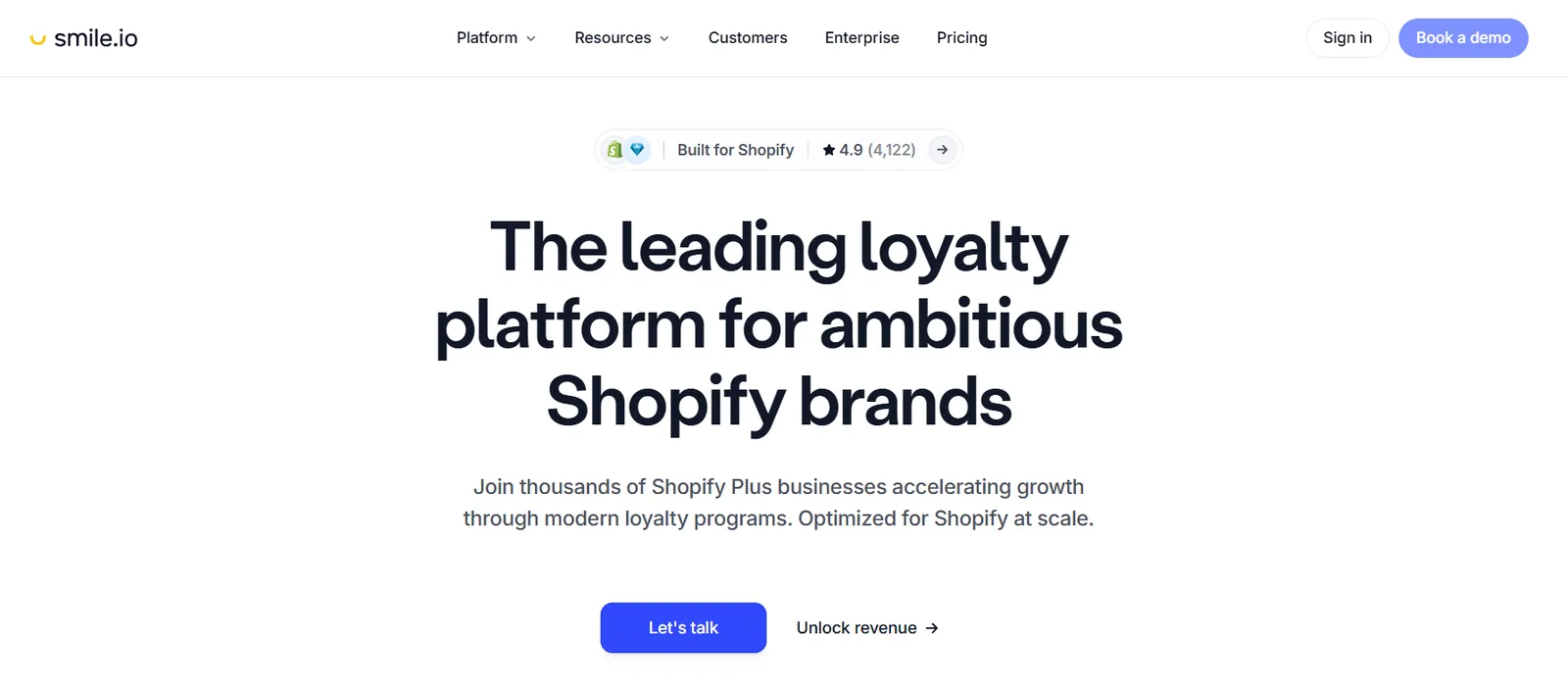
15. Smile.io: Best for launching a first loyalty program on Shopify or BigCommerce
Smile.io gives a Shopify or BigCommerce store a points and referral program it can launch without a developer. Customers earn points for purchases, signups, and birthdays and spend them on discounts, free shipping, or free products.
As the program grows, VIP tiers rank members by amount spent or points earned, and two-sided referrals give both the member and the friend they refer something to spend. Your team adds each piece in Smile Admin, so the person who launched the program can keep extending it.
The same balance follows your customer into a physical store if you use Shopify POS. Points earned online remain available at the register, and in-store activity updates the same balance. Opening your first retail location doesn't mean introducing a second loyalty system for it.
However, that shared balance stops at one website. Each Smile.io account connects to a single online store, so launching a second site, such as a new brand or a separate storefront for another country, means a second Smile account and an independent program. Customers can't earn points on one site and spend them on the other, and their VIP status doesn't carry across.
If you're launching your first loyalty program on one Shopify or BigCommerce store, Smile.io lets your team start with points and referrals and add VIP tiers and in-store earning as you grow. But if you run several websites and want members to carry one balance across all of them, you'll need a platform that runs multiple storefronts in a single program.
Smile.io key features
- Points redeemed inside Shopify checkout, without leaving the checkout page (Shopify Plus stores)
- Milestone VIP tiers by amount spent or points earned, with entry rewards and ongoing perks
- Two-sided referral rewards with unique links that sync into Klaviyo and Mailchimp flows
- A Shopify POS loyalty tile sharing one points balance between your online store and registers
- An assisted switch that carries members, point balances, and VIP status over from another loyalty app
Smile.io pricing
Smile.io prices its plans by monthly order volume, integrations, and reports. The three lowest paid plans come with a free trial (14 days).
- Free: $0 per month, 200 monthly orders and 10 specialized reports
- Essential: $15 per month, 500 monthly orders, 1 integration, and 15 reports
- Standard: $79 per month, 1,000 monthly orders, 2 integrations, and 20 reports
- Growth: $199 per month, 2,500 monthly orders (then $20 per additional 100), 25 reports, and unlimited integrations, VIP tiers, and the Loyalty Hub
- Plus: $999 per month, billed annually, for 7,500 monthly orders (then $5 per additional 100) and API access
- Enterprise: custom quote, billed annually, with unlimited orders for retailers above $40 million in annual revenue
Smile.io reviews and ratings
How to evaluate loyalty management platforms
Most platforms on this list can run the program you have today. The harder test is the program you'll have later, once new brands, partners, and rules pile on and finance starts asking what your outstanding points are worth. Each criterion below covers what to look for and a test you can run with a vendor before you sign.
Post-launch program complexity
A loyalty program usually gets more complicated after launch. You may add another brand, work with a partner that uses a different points currency, expand into a region with different rules, or change how members move between tiers. A platform should handle these changes through configuration, without requiring a new implementation each time.
To test it, see how a partner-funded bonus gets configured for one brand while three other brands keep their existing earning rates. If that takes a separate platform instance or a large services project, you've found a limit that will matter later.
Migration risk and reconciliation
Moving to a new loyalty platform is risky if member balances don't carry over correctly. A customer who had 12,000 points on the old system should still see 12,000 after the switch, with the same history behind that balance.
Ask how the platform proves parity before members are exposed. Running the old and new systems in parallel against live traffic, checking every member's balance instead of a sample, and keeping the old system synchronized for a rollback are stronger safeguards than a cutover plan alone. The walkthrough of what a zero-downtime migration requires covers the steps in order.
Check separately what happens to history. Some platforms tag liability per point only from the day tracing is switched on. Migrated balances then arrive untagged, and your finance team rebuilds the history by hand or reports without it.
Financial precision and liability tracking
Points your members haven't redeemed yet are a liability on your books. Accounting rules (ASC 606 in the US, IFRS 15 elsewhere) treat that value as revenue you can't count until members redeem, and they rely on an estimate of how many points will never be redeemed, called breakage. Your auditors will check that estimate, so your finance team needs to see what outstanding points are worth and where each one came from.
Platforms handle liability in four ways. Some publish a money-denominated liability formula and a forecast dashboard, while others report liability as a points count, which tells finance nothing about dollars. A third group keeps a ledger where every point carries the rule, activity, and funding source that issued it, sums the outstanding balance from those records rather than forecasting it, and exports them at the transaction level for finance to journal. A fourth treats breakage as advisory work delivered by a partner.
To test it, pick one member's balance and ask the vendor to trace it back to the purchases that earned it. If the platform can't make that connection, your finance team will have to rebuild the trail outside it.
Real-time vs. batch processing
If a purchase qualifies for points, a discount, and a tier benefit, the platform has to work out those rewards before the transaction completes. With batch processing, the purchase is recorded first and the loyalty outcome is calculated later. Until the next update, the customer can leave with the wrong discount or an outdated points balance. A real-time processing model makes the loyalty decision and the transaction happen together.
Ask whether earn and discount resolve in one evaluation or whether your middleware has to call twice. Then find out whether segments update on every event or on a refresh schedule, since a tier upgrade that posts tomorrow is a benefit the member didn't get today. Last, check whether partner feeds and batch files run through the same rules as API traffic, or through a separate path with its own logic to reconcile.
Integration reality
Start with what the loyalty platform needs to connect to. Some platforms bring their own customer profiles, pages, and engagement tools. Others work behind the systems you already use and return loyalty decisions through APIs and events.
Neither approach is automatically better. If you already use a vendor's wider marketing suite, keeping more of the customer experience there may suit you. If you run your own website, app, CRM, and marketing tools, you may need a platform that handles loyalty in the background without taking over those systems.
Then make sure your architects can see enough of the API and the event model to estimate the integration work before you commit.
Security, compliance, and audit trail
Security reviews usually start with certifications such as SOC 2 Type II and ISO 27001. Your team may also need to check data residency, access controls, disaster recovery, and how often the platform is tested. Some regulated companies need data kept in a specific country or the platform running on their own infrastructure.
Look at what happens when something goes wrong. If a promotion awards too many points or an employee changes the wrong member's balance, you need to know who made the change and what happened afterward. Ask whether the platform records rule executions, configuration changes, and manual adjustments with a timestamp and the person responsible, and whether those records can be exported for an investigation.
What type of loyalty management platform do you need?
Those tests apply to any platform. Loyalty management platforms are also divided by the kind of program they're built to run. Enterprise platforms fit multi-brand programs with strict financial reporting, and API-first (headless) platforms suit teams that build their own member experience. Full-suite platforms bundle loyalty into a vendor's wider customer engagement suite, and ecommerce platforms are built for online stores. The right type depends on how your program works today and what it needs to support as it grows.
Enterprise loyalty platforms
Enterprise loyalty platforms are built for programs that have become part of the company's core transaction and customer systems. They support multiple brands or lines of business, partner-funded rewards, high transaction volumes, and detailed tracking of points and financial liability.
They're usually sold through enterprise contracts and take longer to implement. When you compare them, focus on migration, transaction processing, reconciliation, and financial reporting.
API-first and headless loyalty platforms
API-first and headless platforms keep the loyalty logic separate from the customer-facing experience. Your website, app, or POS handles what the member sees, while the loyalty platform handles earning, rewards, and eligibility behind the scenes.
You get control over how loyalty works across channels. In exchange, your team connects those channels to the platform and maintains the integrations.
Full-suite loyalty and customer engagement platforms
Full-suite platforms put loyalty alongside other products from the same vendor, such as marketing, commerce, customer data, and service, so loyalty data moves between those products without your team building each connection.
But the loyalty module may depend on other products in the suite, and you may need additional licenses or services to use everything the vendor shows for loyalty. This model works best when you already rely on the vendor's wider platform.
Ecommerce loyalty platforms
Ecommerce loyalty platforms are built around stores running on Shopify, BigCommerce, or similar commerce platforms. They focus on getting a points and referral program running quickly, usually without a developer.
That simplicity comes from working inside the commerce platform's structure, which assumes a single brand with one main checkout. Once loyalty spans several brands or partners, or sales happen in channels the store can't see, that assumption breaks down.
ReactorCX: Adding brands, partners, and rules without replatforming
Most of the tests in this guide come back to one question: what happens when your program changes after launch.
ReactorCX is built so those changes happen on the engine you already run. Its program logic is open to your systems at every layer, so your team can add a brand, bring in a funding partner, or write a new earning rule without moving to another platform, whether you run several brands or one brand with many partners.
To see how your own program would run on it, contact Loyalty Methods with the rules you run today, and the team will walk you through how ReactorCX handles them.