
Airline programs have evolved faster than the platforms underneath them. A member flies a codeshare, where the ticket carries your flight number and a partner flies the aircraft, and the miles and status credit depend on who sold the seat, who flew it, and the fare class. Hotel, rental car, and card-issuer partners each send accrual that has to settle. And the mid-year change the program needs is still waiting on a release cycle.
Whether you’re launching a frequent flyer program or replacing an existing platform, start by deciding how much you need the software to handle. You may need it to run the whole program, or just improve partner connections while your current system continues to manage miles and status. If you’re replacing that system, you’ll also need a clear plan for moving member balances and history.
This guide compares 10 airline loyalty software platforms to help you find the right fit. We explain what each does well and the tradeoffs that could affect how you run your program.
Best Airline Loyalty Program Software at a Glance
| Platform | Who it's for | Key strengths | Pricing |
|---|---|---|---|
| ReactorCX | Complex enterprise airline programs with codeshare, alliance, co-brand and legacy-system complexity |
| Custom quote |
| IBS Software iLoyal | Airlines replacing a legacy frequent flyer platform with a purpose-built core |
| Custom quote |
| Comarch Loyalty Management for Travel | Airlines automating interline accrual, billing and non-air partner redemption |
| Quoted per active member, no revenue share |
| Amadeus Loyalty Management | Airlines running reservations and departure control on Altéa |
| Custom quote |
| Loyalty Juggernaut GRAVTY | Airlines extending an FFP into everyday and lifestyle partner earning |
| Custom quote, RFP address |
| Capillary | Airline marketing teams layering real-time traveler data and AI onto a program |
| Custom quote |
| Ascenda | Airline and co-brand programs extending points into a transfer and travel rewards network |
| Custom quote |
| Salesforce Loyalty Management | Airlines connecting frequent flyer data to a Salesforce-wide customer record |
| $20,000 to $45,000 per org per month, billed annually |
| Talon.One | Airlines embedding promotions and miles logic into an existing stack |
| Custom, priced on data volume |
| Currency Alliance | Airlines scaling the partner network and settlement without touching the core engine |
| 2% of value issued or exchanged, no license fee |
1. ReactorCX: Best for complex airline loyalty programs spanning partner networks
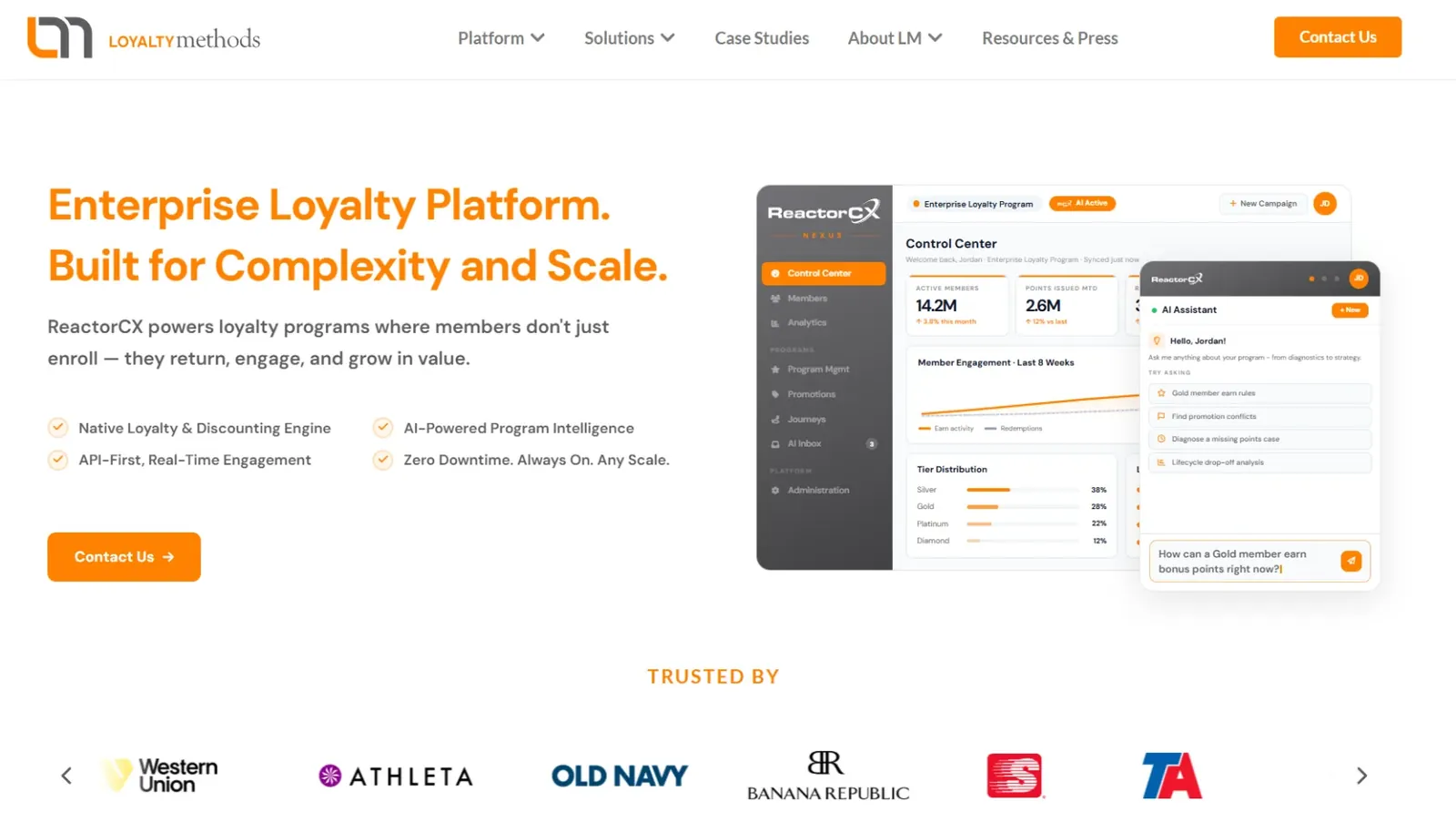
ReactorCX credits miles and progress toward status for flights operated by your partners, using the rules you've set, and does the same for partner activity that arrives overnight. Every channel reads the same member record in real time, so check-in and the lounge see a new status as soon as it's earned.
That crediting works because each activity record carries the details your rules depend on. It identifies the airline that operated the flight and the one that sold the ticket, along with the fare class, booking code, cabin, and codeshare details. Your earning tables and tier credit rules can use any combination of those fields without custom code. And when your program adds a new way to earn, your team can add the field it needs and configure the earning rule. That field then appears across the interface, API, warehouse, and reports without a data migration.
Those rules keep the miles members can spend separate from the credit that counts toward status. One flight can add to both at once, and each follows its own expiry and reset rules. Your liability counts only the miles members can redeem, so status credit never adds to it. And because status credit has its own balances, you can count both spending and distance toward status this year and drop either one next year without rebuilding the program.
When three promotions and a tier benefit all qualify on one ticket, the same call works out the combination your policy allows, favoring the member, the margin, or a partner's funded offer as you've set it, and records why.
Partners connect through FeedXChange, which supports self-service onboarding. A hotel chain or card issuer can send activity files for processing on a schedule you set. Every row runs through the same rules engine as an API transaction, and ReactorCX automates partner settlement and reconciliation. Your team can use templates to configure the feeds and monitor them for errors.
Your marketers can also change earning rules and promotions without waiting on a release. Earn rates, tiers, and promotions are configured from the admin console, and every rule and threshold is reachable through the APIs your systems already use. Your engineers can extend the engine in code when configuration isn't enough.
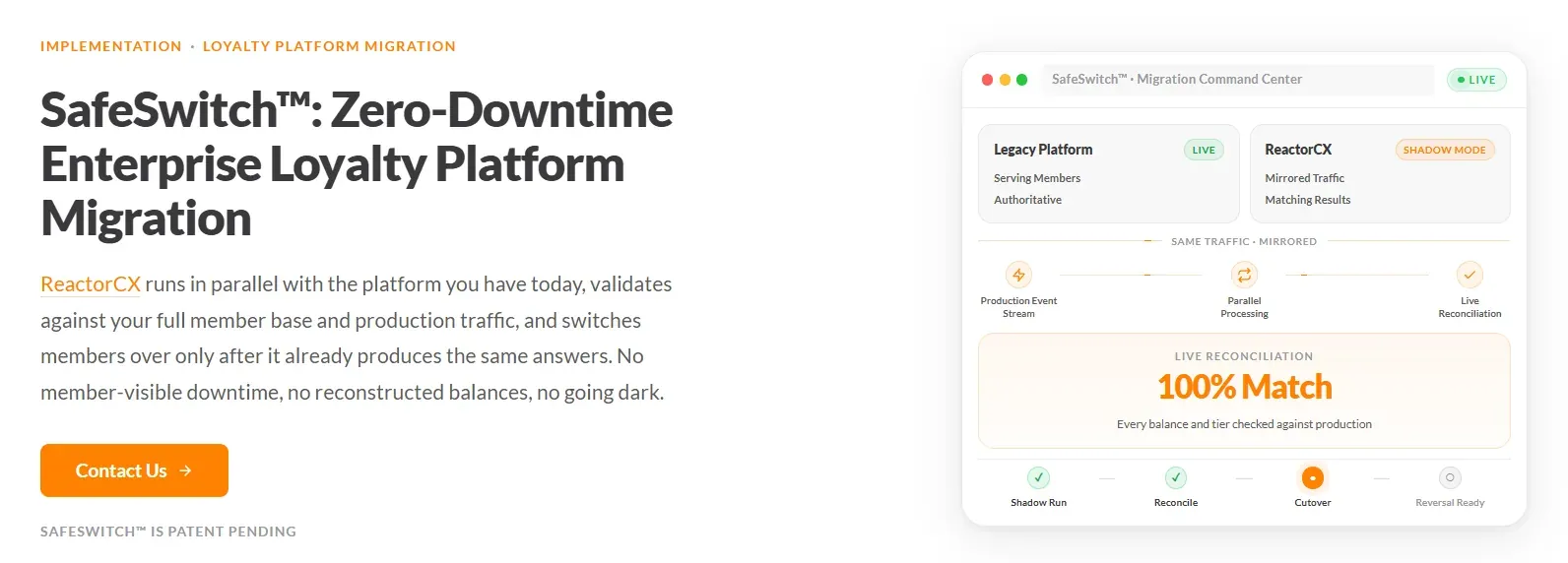
And moving your current program onto that engine doesn't take it offline. ReactorCX runs in parallel with the platform you have today, processing the same production traffic in shadow, and SafeSwitch™ reconciles every balance and tier against the old system across your whole member base before anyone is switched. Once the two systems agree, traffic is redirected to ReactorCX. The old platform stays running and synchronized until the new one is confirmed correct in production, so you can switch back if needed.
ReactorCX fits airline programs whose earning reaches well beyond their own flights, through codeshares, alliance partners, and dozens of hotel, car rental, and card partners. It's strongest when your program has outgrown a platform that needs a release for every rule change and can't be taken offline to be replaced. Because it's headless, your own app and messaging tools keep the member experience, and Loyalty Methods connects them to ReactorCX during implementation.
ReactorCX Key Features
- Codeshare and alliance tier credit: Tier is credited across codeshare, joint-venture, and alliance travel without manual adjudication.
- Real-time offer arbitration: Evaluates valid combinations of overlapping discounts and applies your chosen policy in the same call that calculates loyalty earnings.
- Integration options: REST APIs, event streaming, and file feeds connect the engine to your channels and warehouse.
- Liability and audit reporting: Every earn, burn, tier change, and devaluation is logged, with liability dashboards finance can query.
- Member Care Portal: Service staff can add missing credit for a flight and adjust a member’s balance or tier from the same portal.
- Bring your own model AI: ReactorCX AI drafts a promotion change against your own language model, and nothing goes live without sign-off.
ReactorCX Pricing
ReactorCX uses custom pricing based on your program’s scope, which depends on transaction volume, integration scope across channels and partners, migration scope, and the number of brands, programs, and currencies on one instance. Implementation is included in the engagement.
What Customers Are Saying
"You guys [Loyalty Methods] understanding our problem at the outset, what we’re trying to solve for, and then really putting the tools in the hands of our teams … to make sure that we’re hitting that moment and we’re getting it right."
Kevin Meiners, Head of Loyalty and Payments, Gap Inc.
"LM’s focus on innovation, agility, and successful, seamless delivery has made a massive difference in our efforts."
Lucy Donaldson, Head of Loyalty, Martech and Consumer Ecosystems, Western Union
2. IBS Software iLoyal: Best for replacing a legacy frequent flyer platform with a purpose-built airline loyalty core
IBS Software’s iLoyal puts your frequent flyer program on one platform, from member enrollment to month-end liability reporting. It’s a dedicated cloud-based loyalty product that can integrate with your existing passenger service and other airline systems.
What comes across is your program's logic, rebuilt as rules your own people can read. Earning, redemption, tier, and promotion rules are configured in an English-like editor, so a loyalty analyst changes an earn rate without booking development time, and a rule simulator shows what a change does before it reaches members. This also gives your team a way to check that rules carried over from the old platform work as intended.
Partner agreements are set up in the same editor, each with the rate you bill that partner for the miles it awards, and missing-credit claims are handled partner by partner. Partners can also buy points up front or on credit through a self-service portal. If you're in an alliance, the Partner Integration Hub connects those agreements to the Star Alliance, Oneworld, and SkyTeam file exchanges, so alliance earning and billing run on the same records as your own.
How fast a partner's activity posts to those records depends on the feed that partner can send. iLoyal supports partner-specific file formats, and its web services process earning and redemption activity in real time. If a partner sends only a nightly file, miles can’t post until that file arrives and is processed. Moving to real-time posting requires the partner to connect to the web services and send activity as it happens. Your teams will still need to test and maintain that connection.
iLoyal suits airlines replacing a legacy frequent flyer platform, or launching a new program, that want software built only for airline loyalty. If you'd rather keep your current loyalty platform, IBS also sells iLoyal in modules that can work alongside an existing earning and redemption engine.
IBS iLoyal Key Features
- Runs multiple loyalty programs side by side, each with its own rules, currency, and partner set
- Gives members consumer and corporate portals plus a native mobile app for points, tier progress, and redemption in real time
- Manages corporate loyalty for SME and business-travel accounts, with rewards and benefits set per account
- Detects loyalty fraud with a configurable rule engine and machine-learning models, backed by case management and operator alerts
- Issues, manages, and redeems vouchers and flight credits from disrupted trips through a travel digital wallet
IBS iLoyal Pricing
IBS doesn't publish pricing for iLoyal. It's sold as an enterprise cloud subscription, quoted for each airline program.
3. Comarch Loyalty Management for Travel: Best for automating interline flight accrual, billing, and non-air partner redemption
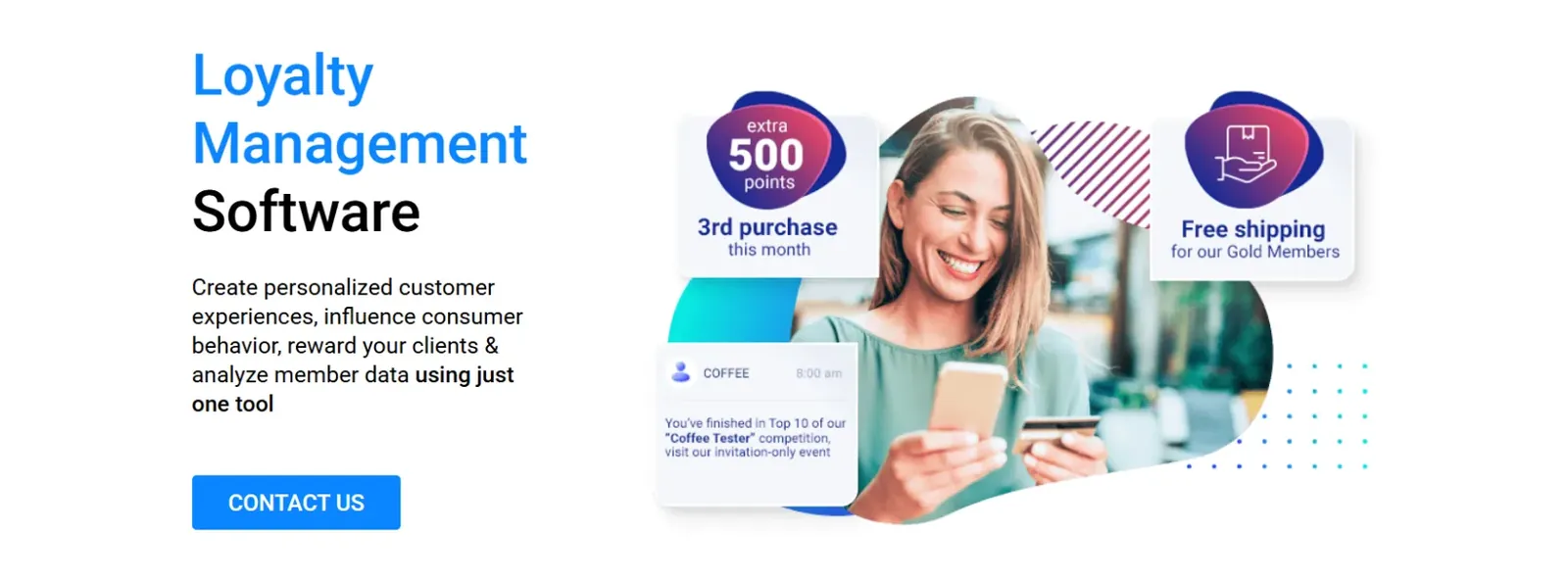
Comarch Loyalty Management for Travel handles the earning and billing that run between your airline and its partner carriers, in both directions. It sends each partner records of the flights its members take with you, and it processes the records partners send when your members fly with them. Each incoming record is matched to the member by name, and every transaction is marked accepted or rejected, so your team can see which credits need follow-up.
Billing works off those same records. Files going out bill a partner for points you issued on its flights, while files coming in carry what you owe when your own flights earned in a partner's program. Retro claims arrive through the same flow inside a back-dating window you set, say 14 to 180 days after departure, and they're matched to the member by name using the algorithm you chose for that partner.
On the redemption side, an award can be priced for the whole itinerary, for each direction of the trip, or for each flight. With per-flight pricing, each flight can have its own cabin class and its own reward partner, usually the airline that marketed it, which matters when one trip mixes your flights with a partner's. Members can also spend points, or points and money, on hotel stays and car rentals, for themselves or for someone else.
Those partner flows move on files, though. The platform verifies a retro claim automatically only when you feed it your non-member flight transactions, and live integration with a flight data source is scoped inside the implementation project rather than switched on. Without that feed, a failed claim goes to an agent to settle after a few cycles.
Comarch is worth considering when interline accrual and billing take up most of your team's month-end work. If your members earn almost entirely on your own flights, you'd use little of its partner tooling.
Comarch Loyalty Management Key Features
- Sets accrual rules for flights and ancillary services on distance, fare, cabin class, booking class, or other flight data sent with the transaction
- Configures elite tier benefits as bonus points, longer or no expiration, redemption discounts, and selectable perks such as free baggage or fast track
- Links co-brand credit cards to a member account by a stored card identifier, so card partner transactions post without the loyalty number
- Reports expiration and liability on outstanding points and rewards, alongside partner billing, in the CLM Business Intelligence layer
- Runs several B2C and B2B programs on one multitenant platform, set up differently by country or region
Comarch Loyalty Management Pricing
Comarch doesn't publish a rate card for Loyalty Management for Travel. Each quote is scoped to the modules you take, your program's scale and member volume, and the complexity of your integrations.
4. Amadeus Loyalty Management: Best for airlines using Altéa

Amadeus Loyalty Management adds a frequent flyer program to the Altéa reservations and departure control systems you already run. Customer loyalty is one of Altéa's own add-on solutions, so it comes from the vendor you already work with for your passenger systems.
The partner side of that program runs through Loyalty Partner Management Services. Instead of exchanging accrual files with every partner separately, you send one daily batch, and the service checks the formats, validates the fields, and routes each file to the right loyalty system. As partner earning and missing-credit claims come through, it identifies the marketing carrier and checks each flight's fare class to decide what each earns. Billing runs through the same service, along with partner certification and disputes over missing files, meaning your IT team doesn't need to handle those partner by partner.
Members can earn on distance or ticket value with alliance partners, other airlines, and non-air partners alike. The same engine tracks tier status, redeemable miles, and when miles expire. Your marketing team can run several targeted promotions at once, each with its own automated alerts to members, and measure how each one performs.
With Loyalty Partner Management Services, partner updates follow a daily batch schedule. If you need miles credited as an activity happens, you’ll need to arrange a real-time connection with that partner. Loyalty Management supports real-time exchange through web services. Partners using daily files will still follow their batch schedules, and your team will still need to monitor transactions and help test the connections.
Amadeus Loyalty Management fits airlines on Altéa that want partner file exchange handled as a service. If your current loyalty engine is staying, Loyalty Partner Management Services also exchanges data with any loyalty system, so improving how partner files are handled may not mean replacing it.
Amadeus Loyalty Management Key Features
- Keeps a centralized member repository with demographics, contact details, preferences, special requirements, and member card status
- Supports miles exchange, sale, and purchase, alongside upgrades, vouchers, and miles-and-cash redemption
- Provides a white-label member portal and a multilingual mobile app that carry your own brand identity
- Records the full communications history across email, web, and SMS, with configurable templates in any language or alphabet
- Produces standard and customizable reports, exportable to spreadsheet, PDF, and HTML
Amadeus Loyalty Management Pricing
Amadeus doesn't publish pricing for Loyalty Management. Contact its sales team for pricing, or speak with your account manager if you already use Amadeus.
5. Loyalty Juggernaut GRAVTY: Best for extending an FFP into everyday and lifestyle partner earning
Loyalty Juggernaut GRAVTY lets your members earn miles on everyday purchases, so a traveler who flies with you twice a year can keep earning between trips. It's a full frequent flyer engine with tools for managing partners built in.
That everyday earning comes from partners you onboard and manage inside GRAVTY, from prospecting and onboarding to offer creation, invoicing, and settlement. A small local business goes through the same partner portal as a co-brand bank, and each partner gets its own access to set up offers, earning and redemption rules, and reports.
Partners buy miles from your airline to reward their own customers, which turns a retailer or a dining brand into a source of revenue beyond seat sales. As members earn and redeem across that network, GRAVTY works out what each partner owes your airline and what your airline owes it, and settles the difference once per cycle. Each partner gets a statement it can reconcile against its own records.
You run GRAVTY one way only, as multi-tenant SaaS on AWS, with no on-premise or hybrid option. If your airline needs to host its loyalty platform in its own data center, GRAVTY won’t meet that requirement. The platform does update continuously, though, so you don’t have to maintain your own version of the software.
GRAVTY is built for airlines that want partner mile sales to grow into a revenue line of their own, through a partner network that reaches well beyond travel. A program whose members earn mostly on flights and alliance partners won't get much from that network.
GRAVTY Key Features
- Models marketing and operating carriers, codeshare and interline fare classes, alliance rules, and retro claims
- Connects into the major passenger service, reservations, and departure control systems
- Lets your team set earn, burn, tier, and offer rules in a no-code editor, without a development cycle
- Reports liability and breakage with scenario planning, IFRS-compliant balance sheet and P&L statements, and an audit trail of who changed what and when
- Migrates a live program by writing every transaction to both platforms in parallel, then moving traffic across before the old system is switched off
GRAVTY Pricing
Loyalty Juggernaut doesn't publish a list price for GRAVTY. Each program is quoted individually, based on discovery with your team, the integrations it needs, and the program's requirements.
6. Capillary: Best for layering real-time traveler data and AI-driven customer intelligence onto an airline loyalty program
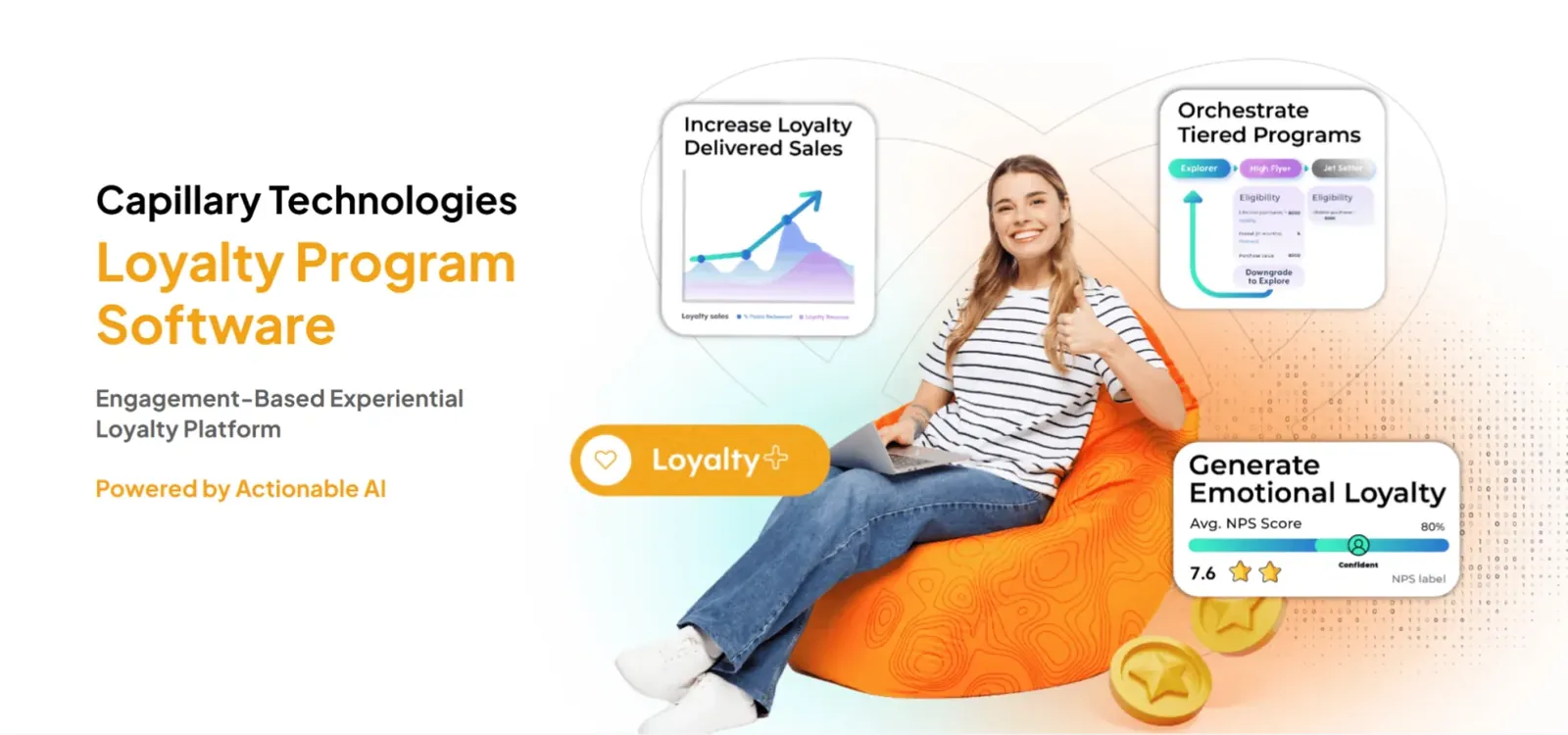
Capillary lets your marketers act on what a traveler did this morning, such as a booking they just made or a flight they just boarded. Its Loyalty+ platform manages points and tiers, while its marketing tools help your team personalize offers.
That works because Capillary brings reservations, boarding, travel status, and partner interactions into one traveler profile. CDP+ matches records across channels and updates that profile in real time, giving your team a combined view of each traveler’s activity.
Each profile carries a predicted lifetime value and churn risk, and Insights+ turns the history behind the numbers into recommendations your loyalty team can act on. From there, aiRA builds the campaign. Your team describes the audience in plain English, and aiRA assembles the segment, picks the rewards, and localizes the message for each market, with nothing reaching a member without your approval.
If you'd rather keep your current frequent flyer platform, SessionM, part of Capillary, is built to work alongside the system that already processes your points and tiers. That leaves you running two loyalty systems side by side, with the data passing between them.
When your marketing team wants to personalize campaigns across markets from what travelers are doing now, Capillary puts the traveler data and the campaign tools in one place. If your priority is partner billing and interline accrual, though, you'd be using less of what sets it apart.
Capillary Key Features
- Integrates loyalty management with SabreSonic, Customer Insights, Payment, and Dynamic Rewards for airlines already running Sabre
- Manages a partner ecosystem across airline and travel partners, with partner mile sales as a revenue stream beside the program
- Offers close to 70 preset behavior and propensity filters for building and testing new segments
- Builds spin wheels, scratch cards, streaks, milestones, and leaderboards in a no-code builder, with over-the-air updates to live experiences
- Masks PII before any input reaches the model, requires human approval on every customer-facing AI action, and keeps a full audit trail of AI interactions
Capillary Pricing
Capillary doesn’t publish a price list on its website. Contact its sales team for pricing.
7. Ascenda: Best for extending an airline or co-brand card program's points into a global transfer and travel rewards network
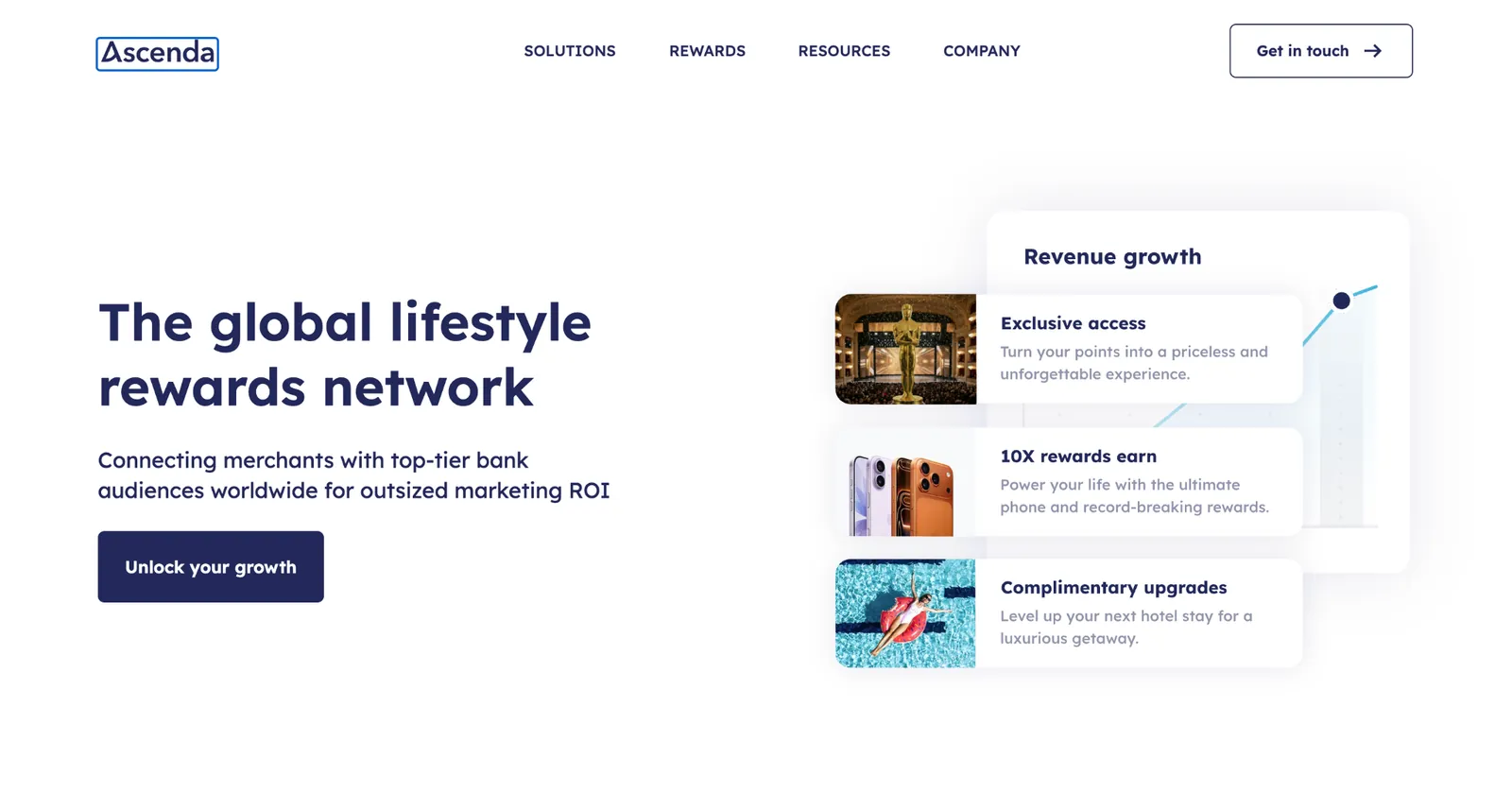
Ascenda gives your members more ways to use their points, whether that's moving a balance to another travel program or spending it on a flight. TransferConnect, its points exchange network, connects you to dozens of partners worldwide through one API or file transfer connection, so you don't negotiate a separate deal for every destination currency.
That connection is added alongside the program you already run rather than replacing any part of it. You plug an existing currency into the network, which leaves earn rates, tier thresholds, and qualification logic on the platform that runs them today. Members see the difference at redemption, where conversions happen in real time, and Ascenda reconciles and settles with each receiving program.
The receiving programs include airline frequent flyer programs and hotel loyalty programs, so members can move points earned on everyday card spending into an airline program and redeem them for an award flight. They can also use points to book flights and hotels in your app, across more than 200 airlines, including low-cost carriers, and over 900,000 hotels. Ascenda handles the supplier contracts and settlement for those bookings.
TransferConnect doesn’t replace the system that manages your airline’s earning rules and status qualification. That system still needs to credit miles correctly for codeshare and alliance flights. If you're building a new program, you'll need to choose that core system first and add the transfer network after it.
Ascenda fits co-brand card and airline programs that want to give members more ways to redeem, from transfers into other travel programs to flights and hotels booked in your own app. It works after miles are issued, though, so it adds little if your harder problem is how members earn and qualify for status.
Ascenda Key Features
- Lets members pay with points on any card purchase online, in store, or at the pump, with points reserved during the transaction to prevent double spending
- Provides a core points ledger and accrual engine for a program standing up its own currency
- Ships a white-label rewards portal with OAuth, Federation, and Active Directory single sign-on, plus a zero-integration deployment option
- Draws digital gift cards, cashback, carbon offset, and crypto redemption from the same rewards marketplace
- Includes partner trademark usage rights for the brands shown on your member-facing screens
Ascenda Pricing
Ascenda doesn't publish pricing. Each program is quoted individually, and points transfers are priced with no pre-purchase requirement attached.
8. Salesforce Loyalty Management: Best for connecting frequent flyer data to a Salesforce-wide customer record
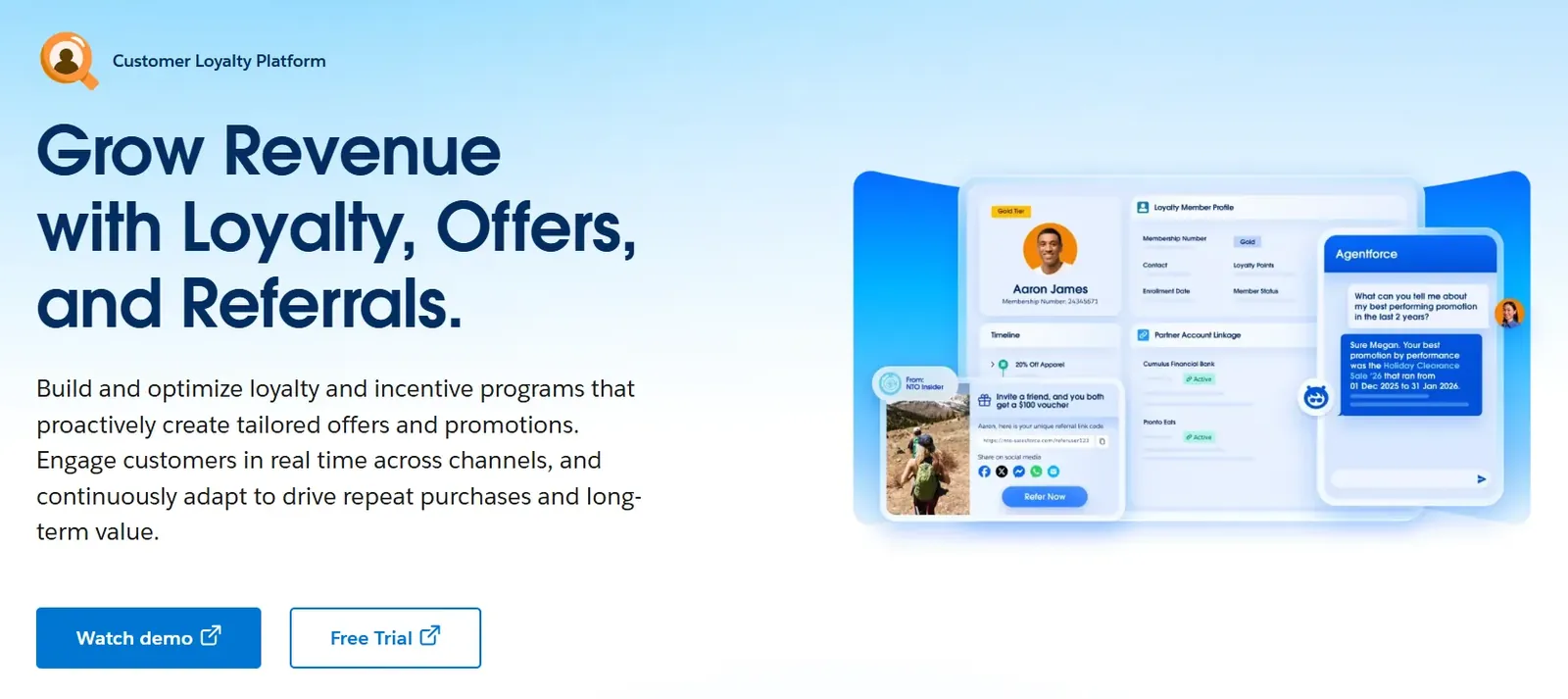
Salesforce Loyalty Management gives your marketing and service teams access to a member’s mileage balance and tier status. It runs on the Salesforce Platform and manages your program’s points and tiers, with analytics to track the liability tied to unredeemed rewards.
Your marketing team builds the earning rules, tiers, and rewards for member records with point-and-click tools, and the result ties back to the CRM as one member view. A tier upgrade, a points milestone, or an expiring reward can trigger a campaign in Marketing Cloud Journey Builder in real time, and the balance and expiry dates behind it feed the email and SMS that follow. On Data 360, you can also combine loyalty data with customer activity and purchase history to choose who receives each campaign.
The same record helps your service team when a flyer calls about a credit that never posted. On the Advanced plan, agents can review member activity and open a case in a dedicated loyalty service console. Flight activity can reach the program through a real-time API, carrying the flight’s origin, destination, distance, and flight number. Salesforce then runs the loyalty rules you’ve configured for that activity.
When you use that API, promotion limits for individual members need a separate eligibility check. If a fare sale allows only one bonus per member, your integration needs to check eligibility through Salesforce’s Eligible Promotions API before applying the offer. You can build that check into a shared connection between your systems and Salesforce, but your team must maintain it as those systems change.
Salesforce is a good fit for airlines that already use its marketing and service tools and want those teams working from the same member data. It’s not a fit if you want your loyalty engine to run outside the Salesforce Platform.
Salesforce Loyalty Management Key Features
- Onboards a partner as an accrual partner, a redemption partner, or both, with prepaid or postpaid billing and a ledger record for every partner transaction
- Runs tier groups on a fixed or anniversary qualifying period, with more than one qualifying currency sharing the same reset cycle
- Connects a global distribution or reservation system through a prebuilt MuleSoft integration kit
- Calculates outstanding liability as points balance times cost per unit, plus issued vouchers times cost per voucher
- Traces each redemption back to the accrual records it consumed, for currencies with fixed-duration or activity-based expiration
Salesforce Loyalty Management Pricing
Loyalty Management is licensed per org, per month and billed annually across three tiers, with a free trial available first. Analytics seats are licensed separately, at $165 per user per month for Tableau CRM for Loyalty Management.
- Starter: $20,000/org/month. A single program with quick promotions, static benefits management, 1 million loyalty events a year, and one CRM Analytics for Loyalty Management license
- Growth: $35,000/org/month. Adds member administration, reward management, full benefits management, and dynamic promotions management, with simple partner management and 15 million loyalty events a year
- Advanced: $45,000/org/month. Adds multiple programs on one org, advanced partner management, and 50 million loyalty events a year
9. Talon.One: Best for embedding promotions and miles-based rewards logic into an airline's existing technology stack
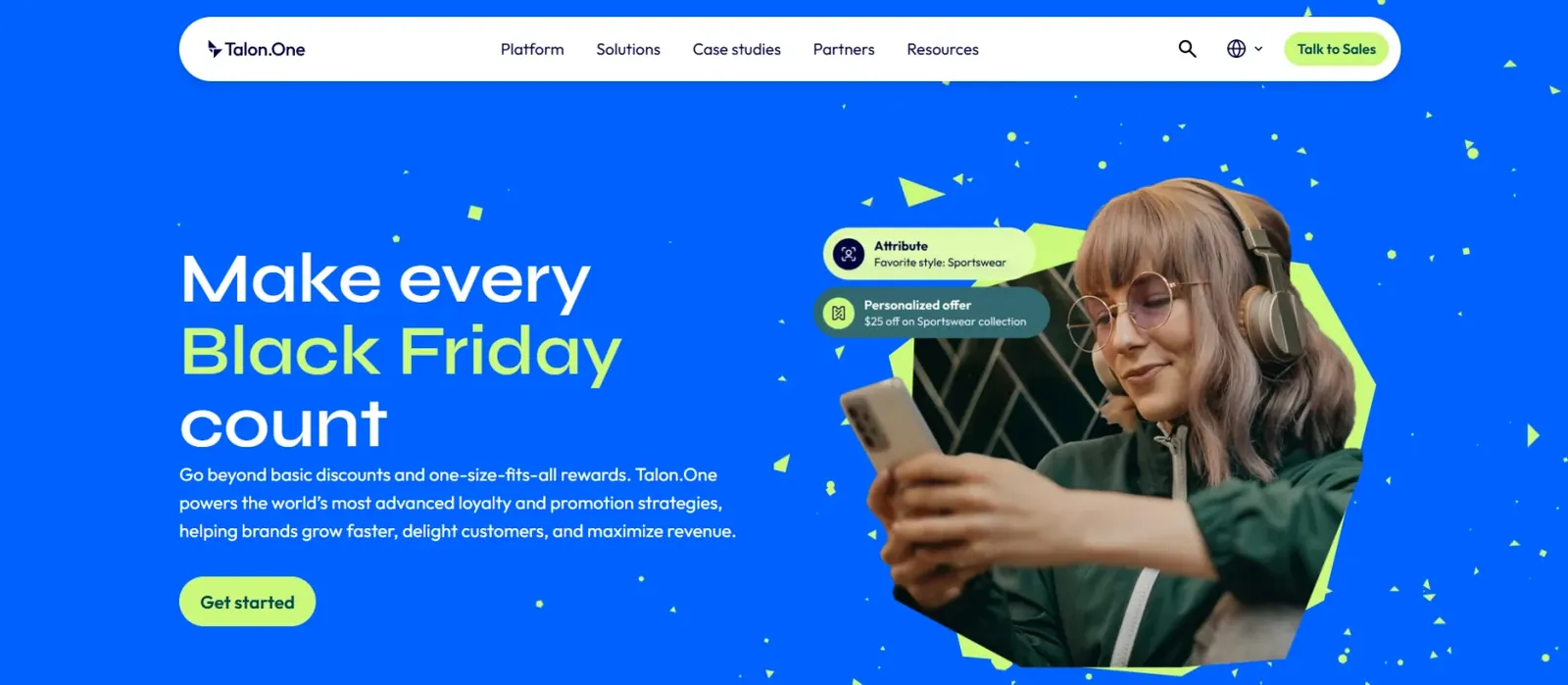
Talon.One lets you change how much members’ miles are worth when they redeem them. For example, a 48-hour offer could give high-value travelers who haven’t booked in months 50% more redemption value. You can target the offer using a score on each traveler’s profile that estimates how likely they are to stop booking with you.
That offer runs on a composable rule engine that your engineers connect to the booking, CRM, and loyalty systems your airline already runs. Each booking reaches it as a single update carrying the seat selection and extra baggage, and the same update reports any change or cancellation.
Once that integration is live, your marketing team builds campaigns in a code-free Rule Builder. They can set a bonus for a particular fare class using the booking data your systems send, and decide whether offers combine or only the largest discount applies, with different settings for separate groups of campaigns.
These campaign rules can also apply to vouchers issued by your service team. With a support-desk integration such as Zendesk, an agent can create a rebooking voucher from the ticket they're working, with a set expiration date and value.
However, Talon.One doesn't come with a ready-made connection to your passenger service system. Your integration team builds the links to reservations and ticketing and keeps them working as those systems change. Once they run, marketers can adjust campaigns without engineering help, but a campaign that needs data Talon.One doesn't receive yet goes back to your developers to map and send through the API.
Talon.One is a good fit for airlines that want flexible promotion rules within their existing systems and have developers to manage the connections. It’s less suited to teams that need a ready-made passenger service system integration and have little capacity for custom development.
Talon.One Key Features
- Holds loyalty points pending until a trip is completed, then activates them through a dedicated API endpoint
- Sets profile-based tiers by point thresholds, with immediate or scheduled downgrades and expiry measured from the program or the tier join date
- Keeps separate point balances inside one loyalty program through subledgers
- Integrates with engagement and commerce platforms including Braze, Shopify, and Adobe Experience Platform
- Holds ISO 27001:2022 certification alongside SOC 1 Type II and SOC 2 Type II attestations
Talon.One Pricing
Pricing is individual to each business and set by the data volume you run through the platform. A developer trial gives your team a personal testing environment at no cost.
- Starter: An individual pricing scheme from at least 500k coupons, with the promotion suite, all third-party integrations, a staging environment and SDK library, and audit logs with user roles and access levels.
- Professional: Adds expert technical support, webhook integrations, a dedicated customer success manager, a dedicated database server, and support for campaign setup and user training.
- Enterprise: Adds individual user onboarding, unlimited users and webhooks, instant troubleshooting and response, and customized SLAs.
10. Currency Alliance: Best for scaling an airline's partner network and settlement without touching the core FFP engine
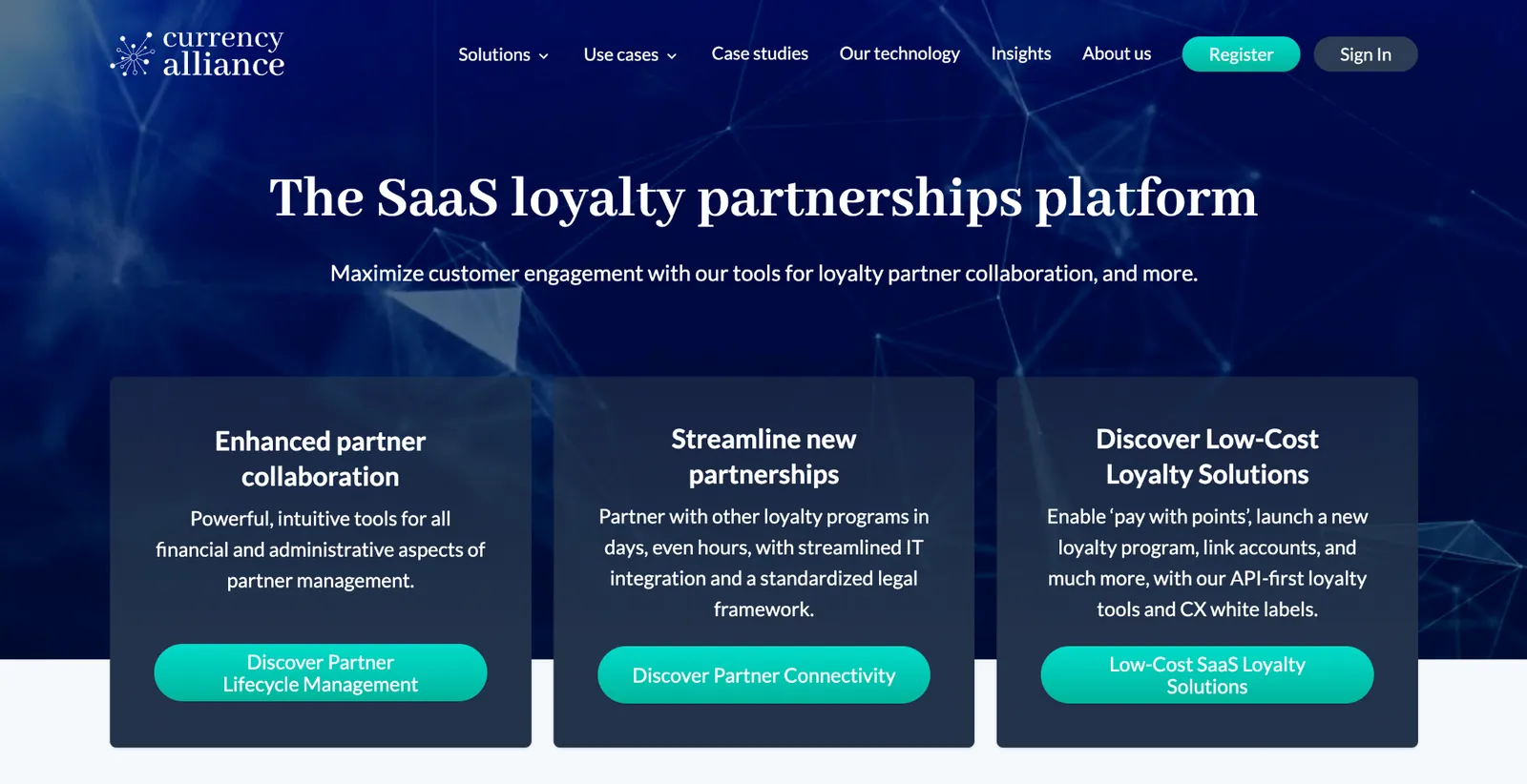
Currency Alliance helps you add earning partners without negotiating a custom contract or building a separate connection for each one. It connects to the software that already runs your frequent flyer program, so you work with every partner on its platform through one API integration. Partners that can't integrate report through the portal or by batch file instead.
Contracting can slow down new partnerships, so Currency Alliance offers alternatives to negotiating a custom agreement for each deal. Its standardized agreement combines a fixed template with two or three pages of terms specific to that partner. Under a serviced agreement, Currency Alliance contracts directly with each partner you approve and handles the payments, so you don’t need to sign a separate agreement with each one.
With that serviced agreement, your accounting team sends one invoice a month to Currency Alliance, which collects from every partner and pays your program in a single transfer. Escrow accounts hold each issuing partner's funds up front, so nothing is outstanding at month end.
Under a serviced agreement, though, Currency Alliance is the contracting party, so you approve each partner and set the terms without holding a written contract with them. Its points bank doesn't include customer data or campaign tools either, so an airline launching a new program on it would need to choose and connect those separately.
Currency Alliance is worth considering for airlines that want to grow their partner network faster while keeping the loyalty system they already run. It won't help if your core engine is the problem, since it works in front of the system that runs your program.
Currency Alliance Key Features
- Finds and connects brands already on the platform through a partner marketplace, including airlines, hotels, retailers, and financial services brands
- Runs a private network where the partners issuing your miles see only your brand
- Enables or blocks issuing, redemption, and exchange for each partner individually from the management portal
- Exchanges your miles and a partner's currency in real time, with dynamic rules that carry each partnership's commercial terms
- Identifies members at checkout on any point-of-sale terminal or browser-enabled device through a free app, with no hardcoded integration
Currency Alliance Pricing
Currency Alliance charges 2% of the loyalty value issued to members or exchanged between programs, with no license or setup fees and no long-term contract. You can open a marketplace account and browse partners for free before committing.
Why leading airlines invest in loyalty platforms
A frequent flyer program at American Airlines Group's scale is a business inside the airline, with its own revenue lines and its own balance-sheet obligations. AAdvantage members earn miles and Loyalty Points through more than 1,000 non-flight partners, and cash payments from co-branded card and other partners reached $6.2 billion in 2025. American also carries a current loyalty program liability of $3.7 billion, which is revenue it expects to book as members redeem miles over the next twelve months.
United's MileagePlus changes for 2026 show how much a single program update asks of the platform. For tickets issued from April 2, flight earning moves to new fare-based rates that vary by Premier status and by whether the member holds a United card. The Premier qualification thresholds stay at their 2025 levels. So the platform has to apply a new earning rate for every combination of fare, status, and card at once, while leaving the status rules alone.
Both examples point to five reasons airlines keep investing in the platform under the program. Each of them makes the choice of engine a finance and architecture decision as much as a marketing one.
- Create revenue beyond ticket sales, because partner and card earning turns the program's currency into something banks, hotels, and retailers pay to issue.
- Keep members engaged between trips, since a member who earns on a card, a hotel stay, or a dining partner stays active in the months they don't fly.
- Launch new offers and program changes faster, once marketers can configure an earn rate or a promotion without waiting for a development release.
- Manage complex partner ecosystems more efficiently, with accrual, billing, and reconciliation automated across every partner.
- Gain better control over loyalty economics by tracing every point issued and redeemed to its source, which lets finance calculate liability, expiration, and breakage from real activity.
Which of those you get, and how many, depends on the kind of platform running your program.
What type of airline loyalty platform do you need?
The platforms above offer different ways to run or extend a frequent flyer program. These four categories can help you narrow the list, though some products fit more than one.
Airline-native FFP platforms
These model the whole frequent flyer program, from miles and status through flight activity and partner earning, with the airline rules already configured. Interline accrual and alliance file exchange come built in, and the vendor's implementation teams have moved live programs before. They're a good fit when you're launching a program or replacing its main software and want airline features from day one. But because they cover the whole program, adopting one means replacing your core, even if only part of it is the problem.
Airline-suite loyalty platforms
These loyalty products come from vendors that also provide airline systems, such as reservations and departure control. If you already use that vendor’s software, its existing integrations may reduce the work needed to connect loyalty. Check which connections are included and whether the loyalty product can run independently of the wider suite.
API-first and composable loyalty engines
These engines connect to your existing systems through APIs, and members reach their accounts through your own app or website. They're the right choice when your engineering team owns the stack and wants to keep the PSS, the CRM, and the data warehouse it already has. In exchange, someone has to build those integrations, either your team or the vendor's implementation team, along with any airline-specific logic the engine doesn't model.
Partner and loyalty-currency platforms
These extend an existing frequent flyer program through points transfers, partner connectivity, rewards content, reconciliation, or settlement, and they leave the core engine in place. They're a good fit when your current loyalty system works well and your priority is growing the partner network. They don't change how members earn or qualify for status, though, so they won't fix a core system that's holding the program back.
How to choose the best airline loyalty program software
Knowing which type of platform you need narrows the list. The six decisions below sort what's left, and each one is specific to how an airline program earns, settles, and changes.
1. Decide whether you need a new core FFP engine or an additional loyalty layer
Separate the platforms that can run the entire frequent flyer program from the products that focus on promotions, CRM, partner connectivity, or rewards. If your current system can’t support the program’s rules, adding another tool may leave the main problem unresolved. If it works well and you only need more partner connections or better promotions, extending it may involve less work than replacing it.
2. Evaluate Your Existing Airline Tech Stack
List the systems the loyalty engine has to connect to. For most airlines that means:
- The passenger service system, the reservation system, and the departure control system
- The CRM or customer data platform, the mobile app, and the website
- Airport systems, payment systems, and revenue accounting
- The co-brand and card systems, and the data warehouse
Then check which of those connections each vendor already has and which would be built for your project. If you use several vendors or expect to change your passenger service system, ask how the loyalty platform would connect to a replacement and which connections would need rebuilding.
3. Map Codeshare, Alliance, and Partner Requirements
Airline loyalty depends on activity beyond the airline itself. On codeshares, earning rules may depend on the airline whose flight number is on the ticket and the airline operating the flight. Alliance partners also need to recognize member status. Co-branded cards and other non-airline partners add their own transaction feeds, with earning and billing terms that vary by agreement.
Check which partner rules you can configure and which need custom development. Ask how the platform exchanges status and transaction data, and how it handles partner payments. Confirm who maintains any custom connections and how much manual reconciliation your team will need to do.
4. Evaluate Earn, Status, and Redemption Complexity
Airlines qualify members on revenue, distance, or segments, and many run more than one model at once, with fare class, card spend, and partner activity added on top. Ask whether the platform can run several qualification models in parallel and whether tier credit can come from different sources under different rules. Then ask whether a change to any of them ships without rebuilding the program. United's 2026 change is the kind of mid-cycle adjustment your platform should handle as configuration.
5. Review Financial Controls and Partner Settlement
Finance needs records that explain the reported loyalty liability and every partner charge. Ask how the platform records expired miles, credits for missing flights, reversals after refunds, and manual adjustments. Also, check whether your team can trace those changes to the original transactions, and whether each partner charge ties back to the member activity behind it. A total liability figure alone won't provide that detail.
6. Evaluate Migration Risk
Replacing a frequent flyer platform means moving balances, status, history, and partner activity for every member while the program keeps running. Errors can affect members’ miles or benefits, so ask how the vendor will protect those records and keep the program available during the move.
The vendor should explain how it will compare results from the two platforms and whether it checks every member account or just a sample. Running both systems on the same live transactions can reveal differences before the switch, so find out whether that’s part of the process. You’ll also need to agree on how much history will transfer and how partner feeds will be tested. The migration plan should cover any downtime and how you’d return to the old system if something goes wrong. Examples of similar migrations can help you assess how the approach has worked in practice.
ReactorCX: Room for the program changes your airline has planned
ReactorCX is a strong fit for airlines that need to manage complex partner rules, decide offers and tier credit in real time, and run several ways for members to qualify for status at once. As you move toward a decision, focus on the changes you want the platform to make possible.
You may be launching an airline loyalty program with partner earning from day one or planning new offers that your existing software makes difficult to introduce. Those priorities should help you decide what to implement first and which improvements can follow. They also give Loyalty Methods the context to show how ReactorCX would support your plans within the airline systems you need to keep.
If you've outgrown your current platform, that conversation can also cover moving your program onto ReactorCX with both systems running side by side until every member's miles and status match.
Contact Loyalty Methods for a walkthrough focused on your program’s requirements and the changes you want to make.